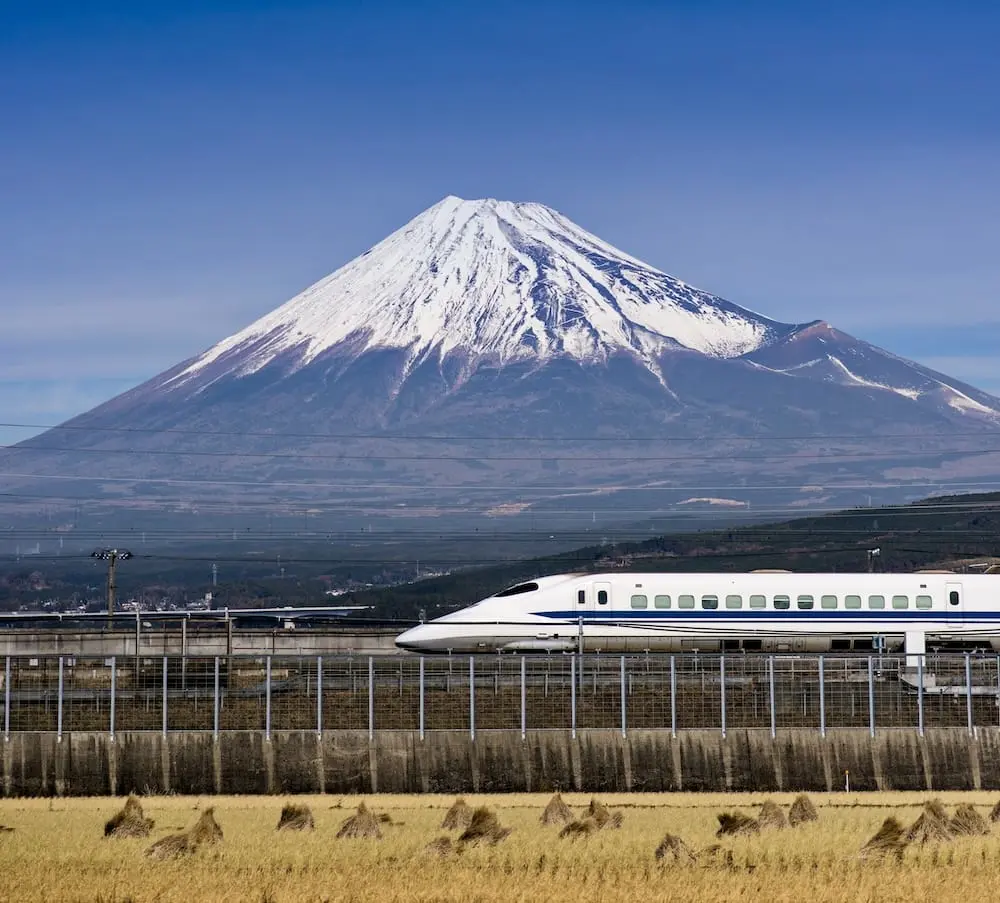
One is a modern, bustling metropolis — a cyberpunk-style neon wonderland.
The other, an ancient capital brimming with tradition that has stood the test of time.
Yep, we’re talking about Tokyo and Kyoto — the two wonders of Japan and two-thirds of the famous Golden Triangle.
No surprise people flock to both in droves.
If you’re planning a trip to both, you’re probably wondering: how to get from Tokyo to Kyoto, exactly?
Well, good news — you’ve got plenty of great options.
These two iconic cities may be about 450 kilometres apart. But not to worry — Japan’s world-class transport makes the journey smooth, like a Shinkansen that’s always on time.
Whether you’re after the fastest bullet train, or just looking for the cheapest way to get from Tokyo to Kyoto, this guide covers it all.
Only real tips, prices, and no guesswork.
Here are the best ways to travel from Tokyo to Kyoto:
Tokyo to Kyoto Transport Comparison (2026)
Here’s a quick side-by-side look at your main options for how to get from Tokyo to Kyoto — from the fastest to the most budget-friendly.
Method | Travel Time | One-Way Cost | Why Choose It |
|---|---|---|---|
Shinkansen Bullet Train (Nozomi) | ~2 hr 15 min | 13,320–14,000 yen | Fastest and most convenient. Direct, frequent, and comfortable. JR Pass valid on Hikari/Kodama only. |
Highway Bus (overnight) | ~8–9 hr (overnight) | Around 5,000 yen (3,000–9,000 yen) | Cheapest option. Saves on a hotel night. Tight seating, better for solo or budget travellers. |
Domestic Flight (Tokyo → Kansai Airport) | ~3.5–5 hr total | 3,000-15,000 yen | Flying is fast, but airport transfers add time. Best if you're landing in Tokyo and heading straight to Kyoto via Kansai International Airport (KIX). |
Local Trains (JR Lines) | ~9–10 hr | 8,360 yen (or under 2,410 yen per day with Seishun 18 Pass) | Very slow but scenic. Only worth it with a Seishun 18 Pass or if you have time to spare. |
Driving (Rental Car) | ~5–6 hr (450 km) | 10,000–12,000 yen in tolls + fuel (5,000–10,000 yen) + rental fees | Good for a flexible road trip. Costly and not ideal for direct city-to-city travel. Driving in Japan requires an International Driving Permit. |
All prices are estimates per adult “~” means approximate. 100 yen ≈ 0.70 USD as of March 2026.
1. Shinkansen Bullet Train: Fastest Way from Tokyo to Kyoto
If you're looking for the fastest and most popular way to get from Tokyo to Kyoto, there's really no competition.
Right at the top is the Tokaido Shinkansen. Fast, smooth, and super convenient — this bullet train really does have it all.
As for how speedy it actually is?
The train can hit up to 300 km/h and cover the city-to-city distance in as little as 2 hours 15 minutes. That's shorter than the runtime of The Wolf of Wall Street.
Travel Time
Nozomi: Around 2 hr 15 min (the fastest)
Hikari: Around 2 hr 40 min (most value-for-money, covered by the Japan Rail Pass)
Kodama: Around 3 hr 50 min (stops at every station; a bullet train, but not exactly the quickest. Also covered by the JR Pass and used for deals like the Platt Kodama)
The great thing is trains run about every 10 minutes.
As long as your itinerary is flexible, you can pretty much just turn up and go.
That said, it’s always wise to book ahead — especially during peak travel periods.
Pro tip: The first Shinkansen from Tokyo to Kyoto leaves around 6:00am (arrives ~8:08am).
So if you're planning a day trip from Tokyo or just want extra time in Kyoto, waking up early might just do the trick.
Departure & Arrival Stations
Departs: Tokyo Station or Shinagawa Station (a good choice if you’re near Haneda Airport)
Arrives: Kyoto Station, right in the heart of the city
Pro tip: If you abhor crowds and hate feeling like a sardine in a tin, Shinagawa Station might be the better option. It's easier to board the Shinkansen there, and people often find it more straightforward to navigate than Tokyo Station.
Ticket Prices
Non-reserved seat: around 13,320 yen
Reserved seat: 14,000 yen
Green Car (first class): 18,000–19,000 yen (you’ll get roomier seats and a quieter carriage)
Children 6–11: Half price
Children under 6: Free (if no seat is needed)
You can buy tickets online, or at JR ticket counters or machines. You usually don’t need to book far in advance — but if you want a specific seat (like a window on the Mt. Fuji side), it’s fastest fingers first. Book early or reserve as soon as you arrive in Japan.
Want to See Mt. Fuji?
Whether you’re chasing that iconic view or just want to level up your Instagram or TikTok game, you’ll need to sit in the right place. Grab a window seat on the right-hand side (seat E in reserved cars; seat D if you're in a pair).
You’ll pass Mt. Fuji around 40–45 minutes after leaving Tokyo — just after Yokohama and Odawara — and may even catch a glimpse if the weather’s on your side.
Now all that’s left is to hope for a clear day — clouds around Fuji can be famously fickle.
Onboard Experience
Shinkansen trains are clean, quiet, and feel more like a domestic flight than a train. Even the standard seats are closer to business class than the squeaky, cramped ones you’ll find in economy. Space won’t be an issue.
You’ll get free Wi-Fi, and there are food and drink carts onboard. Or grab an ekiben (train bento) at the station before departure. Restrooms and overhead luggage racks are also available.
That said, if you travel with large luggage (over 160 cm in total dimensions), you’ll need to reserve a seat with extra baggage space. The other option? Use a luggage delivery service and send your suitcase ahead overnight — a popular choice among travellers.
Can I Use the Japan Rail Pass for This Trip?
Yes, you can use the Japan Rail Pass from Tokyo to Kyoto — but only on the Hikari and Kodama trains. The Nozomi isn’t included.
JR Pass holders can reserve seats for free online or at any JR counter. Just note: as of October 2023, the pass got a price hike. A 7-day pass now costs 50,000 yen, so it’s only worth it if you’re doing more long-distance trips beyond this route.
Not to worry though — we’ve got a 7- and 14-day JR Pass itinerary to help you make the most of it.
Save with the Platt Kodama
If you’re not in a rush, check out the Platt Kodama deal — it gives you a reserved seat on the slower Kodama train for just 11,100 yen. If you’ve got time to spare, the savings might be worth it. It’s about 20% cheaper than the regular fare, and it even comes with a free drink! Just remember to book at least one day in advance.
The Bottom Line
If you're after speed, reliability, and comfort, the Shinkansen is hard to beat. It's hands down the best way to travel by train from Tokyo to Kyoto — especially for first-time visitors or families who’ve never experienced a bullet train before. All in all, it’s the most popular option for good reason.
2. Highway Buses: Tokyo to Kyoto on a Budget (Overnight or Day)
So, we've covered the fastest transport methods. But what about saving a little bit of dough?
Well, for the cheapest way to get from Tokyo to Kyoto, highway buses are your go-to.
Although taking a bus is much slower than the Shinkansen, the savings are huge.
And hey, if that expands your ryokan budget, it's worth the trade-off, no?
In any case, here's the lowdown on taking the bus between Tokyo and Kyoto.
Travel Time
Typically 7–9 hours one-way.
Most people opt for an overnight bus: buses typically leave Tokyo around 10–11pm and arrive in Kyoto at roughly 6–7am.
Why overnight, you may ask?
Think about it: it just makes sense.
You’re combining your travel time with a night’s accommodation — the perfect strategy for budget travellers. That way, the long journey doesn’t eat into your precious sightseeing hours.
There are daytime options too, but they’ll cost you a whole travel day — not ideal if you’ve been looking forward to this trip for half a year.
Cost
Average fare: around 3,500-5,000 yen
Deals: as low as 2,400–3,000 yen (if you book early or travel during off-peak periods)
Premium seats (extra space and privacy): 10,000-12,000 yen — we’ll leave it up to you whether that extra legroom is worth the splurge
Still far cheaper than the Shinkansen (~13,000 yen)
Booking
Easy to book online in English via Willer Express, Japan Bus Lines, JR Bus, Keihan Bus, or Kosokubus.com
As with many things in Japan (and thanks to its booming popularity), book early — especially for weekends or holidays. Don’t count on walk-up seats.
Most buses accept digital tickets via QR code or reservation number
Departure & Arrival
Tokyo: Depart from Shinjuku, Tokyo Station (Yaesu Exit), Ikebukuro, or Tokyo City Air Terminal — all easy to reach by subway. If you’re new to this massive metropolis, check out our guide on getting around Tokyo so you don’t get (too) lost.
Kyoto: Arrive at Kyoto Station, usually the Karasuma Exit. Some early buses (5–6am) might park until the station opens.
Comfort & Seat Types
Options range from standard 4-row buses to cushy 3-row “relax” seats and two-row solo seats
Companies like Willer Express even offer capsule-style pods with curtains if you need your creature comforts
Look for features like leg rests, blankets, privacy curtains, and onboard toilets when booking. Just note — more features, higher fare - that's the way it is. Not all buses have toilets or Wi-Fi too, so keep that in mind when booking.
If you’re tall or a light sleeper who wakes up at the slightest breeze, pay more for a premium seat. You’ll thank yourself later
Tips for Bus Travel
Bring a neck pillow, earplugs, eye mask, and a light blanket or jacket (In summer, buses can be overly air-conditioned — you know; that dry, artificial cold that’s oddly suffocating. Layer up just in case.)
Don’t over-hydrate — not all buses have toilets (check before booking)
Stretch during rest stops (usually every 2–3 hours)
Arriving early (~5–6am)? Kyoto Station has 24-hour cafés and coin lockers to chill until check-in
Luggage
Most buses allow one large suitcase (up to 160 cm in total dimensions and 10 kg, stored below) and one small carry-on.
Carrying oversized or multiple bags? Consider using a luggage delivery service
Bottom Line
Taking a night bus from Tokyo to Kyoto is hands-down your most affordable option. With deals starting from just 3,000 yen, it makes perfect sense financially.
Sure, you’ll sacrifice some comfort and time compared to the Shinkansen — but if you’re on a tight budget, it’s a smart move.
Many travellers go Shinkansen one way, bus the other to strike a balance between comfort and cost. So pick your poison, we say.
3. Flying from Tokyo to Kyoto (Via Osaka)
Flying might not be the first thing that comes to mind for getting from Tokyo to Kyoto — but yes, it’s possible.
There’s just one catch. Kyoto doesn’t have its own airport.
For this journey to work, you’ll need to fly into Osaka, then take a train or bus to reach Kyoto.
And yes, it’s nowhere near as simple as hopping on the Shinkansen. But in some cases, it can work.
Here’s what to know.
Flight Time & Transfers
The flight itself only takes around 1 hour, so hooray for that.
But don’t let that fool you — once you factor in things like check-in, security, and transfers on both ends, the total travel time is roughly 3.5 to 5 hours.
That’s quicker than a bus, but obviously longer than the bullet train.
Here’s a breakdown:
Getting to the airport: 30–90 minutes depending on whether you're flying from Haneda (closer) or Narita (much further out). Your choice may also depend on the airline and fare you’re after.
Check-in & security: Domestic flights are usually smooth, but plan for at least 45–60 minutes — especially if you’re checking luggage.
Flight time: ~1 hour
Arrival & transfer to Kyoto:
From Itami: Some people take a monorail + train combo, but the easiest way is the direct airport limousine bus to Kyoto Station — about 1 hour (1,340 yen).
From KIX: Hop on the Haruka Express (~75 minutes, 2,850 yen) — and if you're lucky, it might be the Hello Kitty-themed one! You can also take a 90-minute limousine bus to Kyoto Station.
👉 Need more details? Check out our full guide on how to get from Kansai Airport to Kyoto.
Airlines & Airports
Not sure whether to depart from Haneda (HND) or Narita (NRT)? Here’s what to keep in mind:
Haneda: Much closer to central Tokyo (about 30 minutes from Tokyo Station)
Narita: Further out (60+ km) and mainly serves international routes
On the Osaka side:
Itami Airport (ITM): Closest to Kyoto and handles domestic flights
Kansai International Airport (KIX): Further from Kyoto but handles both domestic and international flights
Most travellers go Haneda → Itami with JAL or ANA. Budget airlines like Peach and Jetstar fly from Narita or Haneda to KIX, and sometimes Itami too.
Flight Costs
Flying can be cost-effective — sometimes.
Low-cost carriers (LCCs): 3,000–5,000 yen (Peach, Jetstar) if you book months in advance. But these often depart from Narita, which adds time and cost.
JAL/ANA: Around 7,000–11,000 yen (advance fares). Look into the JAL Japan Explorer Pass or ANA Discover Japan Fare, both offering discounted domestic flights for foreign travellers.
Regular fares: Can go up to 15,000+ yen if booked last-minute
Also, don’t forget to factor in transfer and luggage fees. For example, flying Narita → Kansai could add 5,000–6,000 yen in airport transfer costs alone.
And if you’re using a Japan Rail Pass, train transfers are already covered — so flying might not make much sense.
When Flying Makes Sense
You’re landing at Narita or KIX from abroad and want to go straight to Kyoto
You’ve scored a super cheap flight deal
You’re visiting Osaka first, and flying into KIX fits your route
Shinkansen is sold out or delayed (rare but possible during peak seasons)
Tips for Flying from Tokyo to Kyoto
Fly from Haneda if you’re already in Tokyo — it’s faster and cheaper to reach than Narita
Choose Itami over KIX if you’re heading straight to Kyoto — it’s significantly closer
Check luggage rules for budget airlines — you’ll pay extra for checked bags and seat selection
Use the Haruka Express from KIX — it’s the fastest and most comfortable way to get to Kyoto, and it’s JR Pass-friendly
Arrive early at the airport — even if domestic flights are smooth, large terminals like Haneda take time to navigate
Weather matters — typhoons or heavy snow can delay or cancel flights. The Shinkansen is typically more reliable
Bottom Line
Flying from Tokyo to Kyoto can work — especially if you’re arriving internationally and want to head straight to Kansai. But for most travellers, the Shinkansen is more than enough.
Unless you’ve found an unbeatable deal or are already at Narita or KIX, the bullet train usually wins. You just can’t beat that combination of speed, comfort, and convenience.
4. Driving from Tokyo to Kyoto: Road Trip Adventure
Driving from Tokyo to Kyoto is doable, especially if you’re keen on road trips or want to explore places in between.
After all, chasing a little Walter Mitty-style adventure can be good for the soul.
But if your goal is simply to get from point A to B, the bullet train wins hands down for speed, ease, and cost.
Distance, Route & Time
The driving distance from Tokyo to Kyoto is about 450–460 km via the Tomei and Meishin Expressways.
With smooth traffic, it takes around 5–6 hours, but congestion can easily push this longer. T
hat said, it’s relatively easy to drive in Japan — especially if you're used to driving on the left.
Just take note: if you choose scenic routes like the Chuo Expressway through Yamanashi for Mt. Fuji views, or the coastal route, your journey will definitely take longer.
Tolls & Fuel
Expect 10,000–12,000 yen in expressway tolls one-way via the Tomei and Meishin Expressways.
Add 5,000–6,000 yen in petrol for a typical car.
Total round-trip costs can hit 35,000 yen — more if you're driving solo.
While there are non-toll routes, they take you through local roads and drastically increase travel time.
It’s doable, but only worth it if you’ve got time to spare. If you're in a group or at least travelling as a pair, these costs won’t sting as much.
But solo? That’s another story.
Rental Car Costs
Basic rentals cost 6,000–10,000 yen/day, with possible 10,000 yen+ drop-off fees if you return the car in Kyoto.
You can book ahead and collect your vehicle at Narita Airport, Haneda Airport, or Tokyo Station.
Licence Requirements
You’ll need an International Driving Permit (IDP) plus your home country licence. Some nationalities (e.g. France, Germany, Belgium) require a certified Japanese translation instead of an IDP.
Driving Conditions
Roads are well-maintained, and Japan drives on the left. Expressways have regular service areas with food, shops, and clean toilets.
But parking in Kyoto is limited and pricey — around 400–600 yen/hour or 1,000–2,000 yen/night at hotels.
Sightseeing areas like Gion and Kiyomizu have very little public parking. So once in Kyoto, a car may feel more like a liability (unless you're planning day trips out of the city).
Speed limits on expressways are typically 100 km/h (~62 mph), though many locals drive at 110–120 km/h if traffic allows.
If you're travelling in winter, make sure you're confident driving in snowy conditions.
Navigation & Parking
Use GPS or Google Maps — and enable toll roads for the fastest route. Drop off your car once you reach Kyoto if you want to avoid parking hassles.
Sightseeing Stops
Driving lets you detour to:
Mt. Fuji or Hakone (hot springs, lakes, scenic views)
Nagoya (halfway stop, museums, miso katsu)
Lake Biwa or Hikone Castle near Kyoto
When Driving Makes Sense
You're travelling with 3–5 people to split costs
You’ve got lots of luggage or gear
You want to stop and explore along the way
You're staying in areas not easily reached by train
Tips for Driving
Rent an ETC card for faster, discounted toll payments
Use service areas (like Ebina SA in Kanagawa) — it’s a famous pit stop
Avoid rush hour (leave after 9am, avoid 5–7pm arrivals). Sundays into Tokyo get especially crowded
Set your GPS to English. You can also get an eSIM before your trip to stay connected
Drive late at night for empty roads — but only if you’re well-rested
Bottom Line
Driving from Tokyo to Kyoto isn’t the fastest or cheapest option.
But it offers flexibility, scenic detours, spontaneity, and that sweet taste of adventure.
If you’ve got the time and want to make the journey part of the experience, it’s a solid choice.
5. Other Options and Special Cases
Local Trains with Seishun 18 Ticket
You can travel entirely by local JR trains (e.g. Tokyo → Atami → Nagoya → Kyoto). The journey takes 8–10 hours and requires multiple transfers — at least four to five — and costs 8,360 yen (base fare). Alternatively, you can use the Seishun 18 Ticket, which brings the cost down to just 2,410 yen per day (12,050 yen for 5 days). Note that this pass is seasonal, available only during spring, summer, and winter. It’s a great option for backpackers with time and a love for slow travel — but be prepared for multiple transfers and potential crowding.
Overnight Local Trains?
There’s no regular overnight local train Tokyo to Kyoto. The old Moonlight Nagara runs only during peak periods, and luxury sleepers like Sunrise Izumo skip Kyoto. So realistically: take a night bus or day Shinkansen.
Sightseeing Train Options?
No direct sightseeing train connects Tokyo and Kyoto, but one scenic route is Tokyo → Kanazawa (via Hokuriku Shinkansen), then Kanazawa → Kyoto (Thunderbird Limited Express). It’s longer (~6–7 hours) but covered by the JR Pass and offers stunning views of the coast and Lake Biwa.
Final Thoughts: What’s the Best Way to Travel Between Tokyo and Kyoto?
When it comes to the best way to travel between Japan’s most iconic cities, the bullet trains still come out on top.
A high speed train along the Tokaido Shinkansen line gets you from Tokyo to Kyoto by rail in just about 2.5 hours — no airport hassle, just a smooth train ride.
Whether you choose the lightning-fast Nozomi or the JR Pass-friendly Hikari, train travel is fast, reliable, and scenic.
Prefer to save money? Bus services are slower but cost-effective — and a comfortable overnight bus ride can double as a night’s accommodation.
Just be mindful that travel times vary depending on the train type, or if you’re flying, the time spent getting to and from the airport can add up.
Most routes pass through major hubs like Tokyo Station, Shin-Osaka, or Kyoto — each a key train station for domestic train services.
And of course, once you’re in town, don’t miss on the top things to do in Kyoto — from cultural icons to lesser-known gems. You’ll also want to explore some of the most beautiful temples in Kyoto, especially if this is your first visit.
No matter your route — train, bus, or plane — one thing’s for sure: getting from Tokyo to Kyoto isn’t just a transfer, it’s part of the adventure.