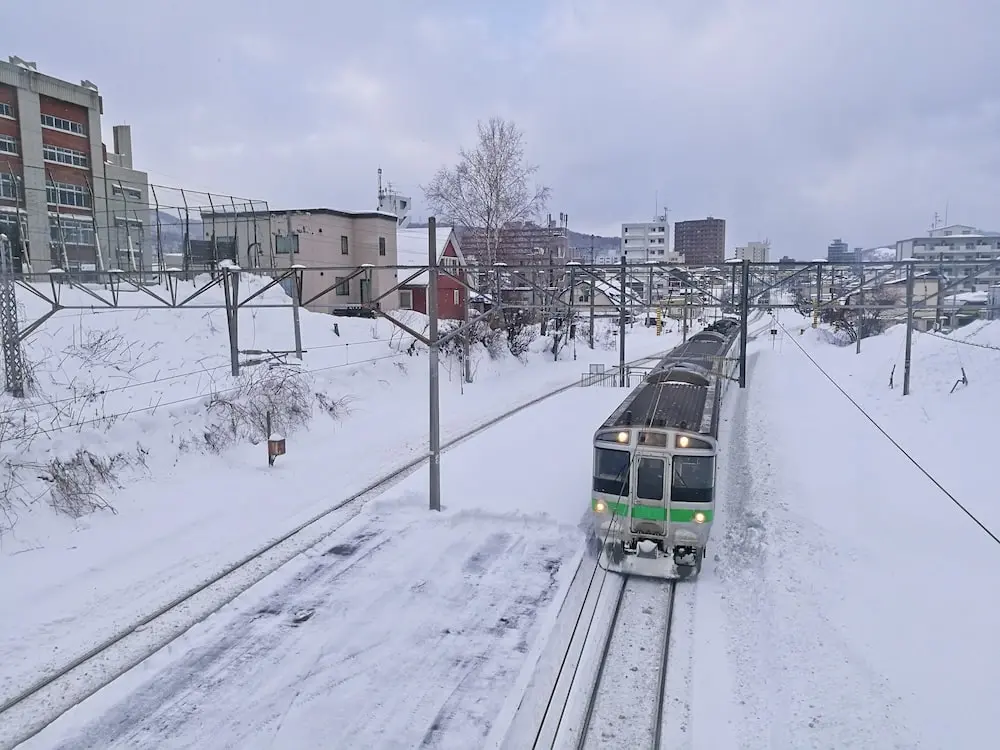
Drop a pin anywhere on a map of Japan, and chances are you’ll land somewhere beautiful.
Few places, though, compare to the massive and seriously stunning island of Hokkaido.
Sure, Japan’s wild north is perfect for a road trip.
But if you’d rather skip the driving, public transport is surprisingly convenient.
And the JR Hokkaido Pass? It’s a total game changer.
With unlimited train travel across the region, hopping between hot springs, flower fields, seafood markets, and snow-covered towns couldn’t be easier.
All that said, let’s get down to the nitty-gritty.
We’ll walk you through what the pass covers, who can use it, prices, how to reserve seats, and tips for planning your route.
First Up, Though, What is the JR Hokkaido Rail Pass?
The JR Hokkaido Pass (also called the Hokkaido Rail Pass) is a special train pass for international travellers.
Think of it as the Hokkaido version of the nationwide Japan Rail Pass – but tailored for Japan’s northernmost gem. (And if we’re being honest, if you’re only travelling within Hokkaido, it’s pretty hard to justify the JR Pass price after the 2023 hike.)
That said, if you’re travelling from Tokyo to Sapporo or Hakodate by shinkansen (bullet train), that’s a different story.
In that case, getting the nationwide JR Pass starts to make more sense . Especially if you’re stopping at other destinations along the way on different lines.
Anyway, back to the Hokkaido Rail Pass.
Like the national pass, it gives you unlimited rides on all JR Hokkaido lines.
That means you can hit up places like Sapporo, Otaru, Hakodate, Furano, Asahikawa, and more.
The best part? No more stressing over individual tickets every time you travel.
There are a few caveats, though.
While the Hokkaido Rail Pass can get you to even the most rural parts of Japan’s second-largest island, there are limitations.
For instance, it doesn’t cover the Hokkaido Shinkansen. You also can't use it for Sapporo’s subway or streetcars (you’ll need an IC card for those), or the South Hokkaido Railway.
That said, it does include some JR Hokkaido Bus routes around Sapporo and nearby towns.
So if you're planning to visit a few different spots, it’s a useful and super convenient option.
As long as you plan your route right, of course.
Who Can Use the JR Hokkaido Rail Pass?
Well, the answer’s pretty straightforward. The JR Hokkaido Pass is only for non-Japanese passport holders. That means those on a tourist visa or Temporary Visitor status.
If you’re a Japanese resident (even those living abroad) or a permanent resident, you won’t be able to use this pass. It’s specifically designed as a transport pass for overseas visitors.
Infants and children under six can travel for free with an adult. In fact, up to two kids can ride for free per adult rail pass holder, as long as they don’t occupy a seat.
Oh, and when you go to exchange or purchase the pass in Japan, don’t forget to bring your passport with the “Temporary Visitor” sticker. (Pro tip: photocopies and residence cards won’t cut it – they’ll need to see the real thing.)
JR Hokkaido Pass Types and Prices
Okay, so the JR Hokkaido Rail Pass comes in three options: 5-day, 7-day, and 10-day passes.
Each pass gives you unlimited rides on JR Hokkaido lines for consecutive days. That means a continuous period, not just any five or seven travel days you choose.
Once activated, the pass is valid until midnight on the final day, regardless of how many times you ride.
Here’s what the pass costs on Pelago (accurate as of March 2026):
Pass Type | Adult | Child (6–11) |
|---|---|---|
22,000 yen | 11,000 yen | |
28,000 yen | 14,000 yen | |
37,000 yen | 18,500 yen |
Children under 6 ride free (if they don’t occupy a seat).
The pass is valid for ordinary cars only. If you'd like to ride in a Green Car, you'll need to pay an additional upgrade fee.
Prices listed are based on Pelago’s current rates as of March 2026. JR Hokkaido’s official prices may differ slightly, so it’s best to check both sources before purchase.
For shorter trips around Sapporo, you might want to consider regional passes.
You can get the Sapporo-Furano Area Pass or Sapporo-Noboribetsu Area Pass (about 10,000-11,000 yen for 4 consecutive days).
But if you're visiting multiple cities or remote areas, the full JR Hokkaido Pass is the better deal.
Where to Buy the JR Hokkaido Pass
Buy it Online (Before Your Trip)
The best way to get your Hokkaido Rail Pass?
Buy it in advance.
You can book it online through Pelago or the official JR website.
How to Book the JR Hokkaido Rail Pass on Pelago
Depending on where you book, you’ll either receive an exchange order or a digital pass. JR East’s online system may let you reserve seats in advance using your digital confirmation.
But why buy early, you ask?
You’ll typically get a slightly lower price — plus, you can often apply promo codes for an even better deal.
Buy it in Japan (After You Arrive)
Not big on planning ahead? No worries.
If you’d rather pick up the pass after landing, that works too.
Just head to a JR ticket counter at major stations like New Chitose Airport, Sapporo, Hakodate, or Asahikawa.
Do note: prices are usually a bit higher than booking online. And if you’re travelling during peak periods, be prepared for possible queues.
Quick Tip
Like other JR Passes, the Hokkaido Rail Pass must be exchanged for a physical pass within 90 days from the purchase date.
But you don’t have to activate it immediately.
You can choose any start date within one month of pick-up — super useful if you’re arriving from elsewhere in Japan and Hokkaido is just one leg of your trip.
How to Use the JR Hokkaido Pass
1. Pick Your Start Date
When you collect your pass, the counter staff will ask you to choose your first day of use. Hopefully, you’ve figured that out by then! Once it’s set, your pass will be valid for a set number of consecutive days. That means it’ll expire at midnight on the final day — no matter what time you first use it. So, plan your journey wisely based on train timings, routes, and connections.
2. Skip the Ticket Gates
Unlike IC cards like Suica or Hokkaido’s Kitaca, you won’t be tapping your pass at the usual gates. Instead, head to a manned gate and show your pass to the JR staff. In some stations, you might be able to insert the pass into an automatic ticket gate and retrieve it on the other side. The same applies when you exit.
3. Find Your Seat
Taking a non reserved seat? Just board any unreserved car and grab an open spot. Got a reserved seat? Head to your designated car and seat — and keep your reservation slip handy in case the conductor checks tickets during the ride.
4. Sit Back and Enjoy the Ride
Like the rest of Japan, Hokkaido’s trains are clean, comfortable, and run on time. The large windows are perfect for soaking up those scenic views — you’ll be daydreaming or snapping photos in no time.
Pro tip: Grab an ekiben (train station bento box) before boarding, especially for longer rides — like the four-hour journey from Sapporo Station to Kushiro Station.
Seat Reservations with the JR Hokkaido Pass
One of the best perks of the JR Hokkaido Pass is that you can make reserved seats bookings at no extra cost — perfect for those longer journeys or busy travel days.
Most limited express trains in Hokkaido offer both reserved seats and non reserved seats, but a few have only reserved seating, so it’s good to plan ahead.
When Should You Reserve?
You must reserve seats for certain trains with no unreserved cars, such as:
Hokuto (Sapporo ↔ Hakodate)
Suzuran (Sapporo ↔ Muroran)
Ozora (Sapporo ↔ Kushiro)
Tokachi (Sapporo ↔ Obihiro)
During peak seasons or on long routes like the 5+ hour ride to Wakkanai, reserved seats are recommended to guarantee a spot, especially if you're travelling with luggage or in a group.
How to Book Your Seat
At the station: Visit any JR ticket counter or use the reserved seat machines at major stations like Sapporo or Asahikawa. These have English support — just insert or scan your JR Pass, choose your train, and print your reservation.
Online in advance: If you bought your pass through the JR East Train Reservation site, you can book seats on select Hokkaido routes before your trip — handy during high-demand events like the Sapporo Snow Festival.
Outside Hokkaido: Travelling from Tokyo or Osaka? You can reserve seats for Hokkaido trains at JR offices across Japan, even before arriving in the region.
Tips for Reserving Seats
Book 1–2 days ahead for popular routes or seasonal sightseeing trains like the Furano Lavender Express. Want scenic views? Ask for a window seat on the ocean side — like the left side of the Hokuto from Sapporo to Hakodate, which overlooks Uchiura Bay.
Note: If using JR East’s online reservation system, there may be a cap on active seat reservations. If booking in person at JR Hokkaido counters, this restriction usually doesn’t apply.
💡 Want step-by-step help? Check out our full JR Pass reservation guide for everything you need to know.
Top Routes Covered by the JR Hokkaido Pass
Getting around Hokkaido can be ultra simple — and surprisingly fun.
Whether you’re heading to the coast, chasing flower fields, or exploring far-flung towns, here are some of the best (and most useful) train lines your pass covers:
Sapporo – Otaru – New Chitose Airport
This is hands down one of the most popular routes. Trains between the airport, Sapporo, and Otaru run frequently — and yes, they’re all included in your pass. Perfect for a chilled-out arrival or a quick trip to Otaru’s magical canals and glassware shops.
Sapporo – Hakodate (Ltd. Exp. Hokuto)
This scenic ride takes about 3.5 to 4 hours on the Hokuto limited express. Expect dramatic coastal and mountain views along the way. Just remember — all seats are reserved, so book ahead!
Sapporo – Asahikawa – Furano/Biei
Dreaming of Farm Tomita and Furano’s famous lavender fields? The pass has you covered. Travel via Asahikawa, then head into the flower-filled valleys of Furano and Biei. In summer, watch for special sightseeing trains like the Furano Lavender Express — all covered by the pass (just make sure to reserve your seat early).
Sapporo – Kushiro (Ltd. Exp. Ozora)
A long but scenic journey, the train to Kushiro takes around 4.5 hours and passes through beautiful rural landscapes. It’s comfy, convenient, and fully included in your pass.
Sapporo – Abashiri (Ltd. Exp. Okhotsk)
Now we're talking remote Hokkaido. This eastern route brings you to Abashiri, famous for drift ice in winter, quirky museums, and even icebreaker tours. Your pass also works on seasonal sightseeing trains like the Ryuhyo Norokko (just pay a small booking fee).
Asahikawa – Wakkanai (Ltd. Exp. Soya/Sarobetsu)
This one’s for the bucket list — Wakkanai is the northernmost city in Japan. It’s a 5+ hour trip, but the wild, rugged views are totally worth it. Don’t forget to grab a reserved seat in advance — and bring a jacket, even in summer!
Off-the-Beaten-Track Lines
The beauty of the JR Hokkaido Pass? It also works on lesser-known lines like the Nemuro, Senmo, and Sekihoku Lines. Great for slow travel, spontaneous detours, and discovering the side of Hokkaido most travellers skip.
JR Hokkaido Pass vs. Other JR Passes
Not sure if the JR Hokkaido Pass is the right fit for your trip? Here's how it stacks up against other options.
JR Hokkaido Pass vs. Nationwide JR Pass
As the name suggests, the nationwide JR Pass covers all of Japan — including the Hokkaido Shinkansen (up to Shin-Hakodate-Hokuto). The catch? It costs roughly 50,800 yen for 7 days.
That’s a big spend.
And honestly, only worth it if you're travelling long distances across regions (think Tokyo to Sapporo or extensive train-hopping).
For Hokkaido-only trips, the dedicated pass offers far better value.
That said, if you're doing a full country-wide journey, check out our JR Pass itinerary guide for 7 and 14 days to make the most of the fare.
JR Hokkaido Pass vs. JR East-South Hokkaido Pass
Priced around 36,500 yen, this 6-day flexi pass covers Tokyo, the Tohoku region, and southern Hokkaido (up to Sapporo and Otaru).
Planning to go from Tokyo to Sapporo by JR Pass? This one’s for you.
It’s ideal for one-way routes from Honshu into Hokkaido — and like other passes, you can prebook the JR East-South Hokkaido Pass online in advance too.
But note: it doesn't cover eastern or northern Hokkaido — places like Abashiri, Kushiro, or Wakkanai. For those, stick with the full Hokkaido train pass.
JR Hokkaido Pass vs. JR Tohoku-South Hokkaido Pass
A more budget-friendly option (around 30,000 yen for 5 flex days), this pass includes Tohoku and southern Hokkaido.
It’s great for short trips from Honshu into Hakodate, but won’t take you much farther within Hokkaido.
JR Hokkaido Pass vs. Sapporo-Furano / Sapporo-Noboribetsu Area Passes
Only heading to central Hokkaido or doing quick day trips from Sapporo? These smaller passes might do the trick:
Sapporo-Furano Area Pass (around 11,000 yen for 4 consecutive days): Covers Sapporo, Furano, and Biei — perfect during flower season or for day trips to lavender farms.
Sapporo-Noboribetsu Area Pass (around 10,000 yen for 4 days): Ideal for hot spring getaways, with coverage between Sapporo and Noboribetsu.
They’re more affordable, but coverage is limited. Choose one if you're based in Sapporo and know exactly where you want to go.
JR Pass vs. Renting a Car in Hokkaido
A car can be handy for remote areas and national parks, especially if there’s no rail access.
But keep in mind: Hokkaido is huge, and winter roads can be tricky — think black ice and the risk of deer crossing.
A smart strategy?
Take the train between major cities, then rent a car locally for off-the-rail adventures.
5-Day Hokkaido Highlights
Day 1 – Sapporo & Otaru
Start in Sapporo, then hop over to Otaru (about 30 minutes by train) to explore the canal, glass shops, and sushi spots. Head back to Sapporo in the evening for a stroll through Odori Park or dinner in Susukino.
Day 2 – Asahikawa & Furano
Catch a limited express to Asahikawa, then continue to Furano and Biei for flower fields and rolling hills. In summer, look out for seasonal sightseeing trains like the Furano Lavender Express — just don’t forget to book a reserved seat.
Day 3 – Abashiri
Take the Ltd. Exp. Okhotsk to Abashiri (about 4 hours). This eastern town is known for its drift ice, quirky museums, and quiet charm.
Day 4 – Kushiro
Travel down to Kushiro, either by local train or via a transfer at Kitami. Spend the day exploring marshlands, spotting cranes, and enjoying a robata-grilled seafood dinner.
Day 5 – Return to Sapporo
Head back to Sapporo on the Ltd. Exp. Ozora, with an optional stop in Obihiro for their famous pork bowl if time allows.
You’ll easily save over 30,000 yen in tickets — and the 5-day pass costs just 22,000 yen.
7-Day Hokkaido Grand Tour
Have a bit more time? This route lets you cover even more of Hokkaido.
Days 1–2: Sapporo, Otaru, Asahikawa, Furano
Day 3: Travel north to Wakkanai — Japan’s northernmost city
Day 4: Head to Abashiri via Asahikawa
Day 5: Continue on to Kushiro
Day 6: Make your way to Noboribetsu for a relaxing hot spring stay
Day 7: Finish in Hakodate, or loop back to Sapporo if time allows
You’ll go from coast to coast — and it’s all included with the 7-day pass.
Is the JR Hokkaido Pass Worth It?
In short: yes — if you’re exploring beyond just one city.
When It Is Worth It
Long-distance travel: Hokkaido is big, and train fares add up fast. A round-trip from Sapporo to Hakodate costs around 19,540 yen, Sapporo to Wakkanai nearly 27,120 yen, and Sapporo to Kushiro around 20,640 yen. That already beats the 5-day JR Hokkaido Pass price of 22,000 yen.
Multi-city trips: Even a loop like Sapporo → Otaru → Furano → Hakodate → Sapporo can rival the pass price. The pass also covers smaller trips like Otaru and Biei, making spontaneous detours easy and free.
Flexibility: Plans change? No problem. With unlimited rides, you can follow the sun or make a last-minute trip without worrying about ticket costs.
When It Might Not Be Worth It
If you're only travelling around Sapporo with maybe one or two short trips (e.g. Otaru or Noboribetsu), single tickets or an area pass like the Sapporo-Furano Area Pass (around 11,000 yen) may be cheaper.
If you're renting a car for remote regions and barely using trains, skip the pass.
Tip: Add up your planned JR Hokkaido train fares using sites like Hyperdia. If the total exceeds the pass price, you’ll save — simple as that.
Frequently Asked Questions
Does The Pass Cover Airport Transfers?
Yes — it includes the Rapid Airport train between New Chitose Airport, Sapporo, and Otaru. This alone saves you about 1,150 yen one-way.
Can I Take The Hokkaido Shinkansen With The Hokkaido Rail Pass?
No — the Hokkaido Shinkansen isn’t included. Use the Nationwide JR Pass or JR East-South Hokkaido Pass instead.
Can I Use The Pass On Non-Consecutive Days?
No — it’s valid for consecutive days only (5, 7, or 10). For non-consecutive use, go for the JR East-South Hokkaido Rail Pass instead.
Do I Need To Show My Passport Every Time?
Only when purchasing or exchanging the pass. After that, just carry it with you — random ID checks are rare.
What If I Lose The Pass?
It can't be replaced, so keep it somewhere safe — like your passport holder or wallet.
Can Locals Use The Pass Now?
Foreign passport holders, including residents of Japan, are eligible to use the JR Hokkaido Pass. Japanese citizens, regardless of residency, are not.
Are There Food Or Sightseeing Discounts?
Not really — there are no major perks, but some stations offer small souvenirs. The main benefit is the unlimited rides.
Final Thoughts: Why the JR Hokkaido Pass is Must-Have for Travelers
If you're heading to Hokkaido and planning to explore beyond just one city, the JR Hokkaido Pass is hard to beat.
It gives you unlimited access to JR train lines, free seat reservation, and the flexibility to change plans without worrying about extra costs.
Just note that it cannot be used on private railways, some company buses, or the Hokkaido Shinkansen.
While select JR buses are included, always check which line you're on and keep your confirmation slips handy.
From sightseeing activities to spontaneous detours, this pass helps travellers get more value out of their journey — without the hassle of buying tickets for every ride.