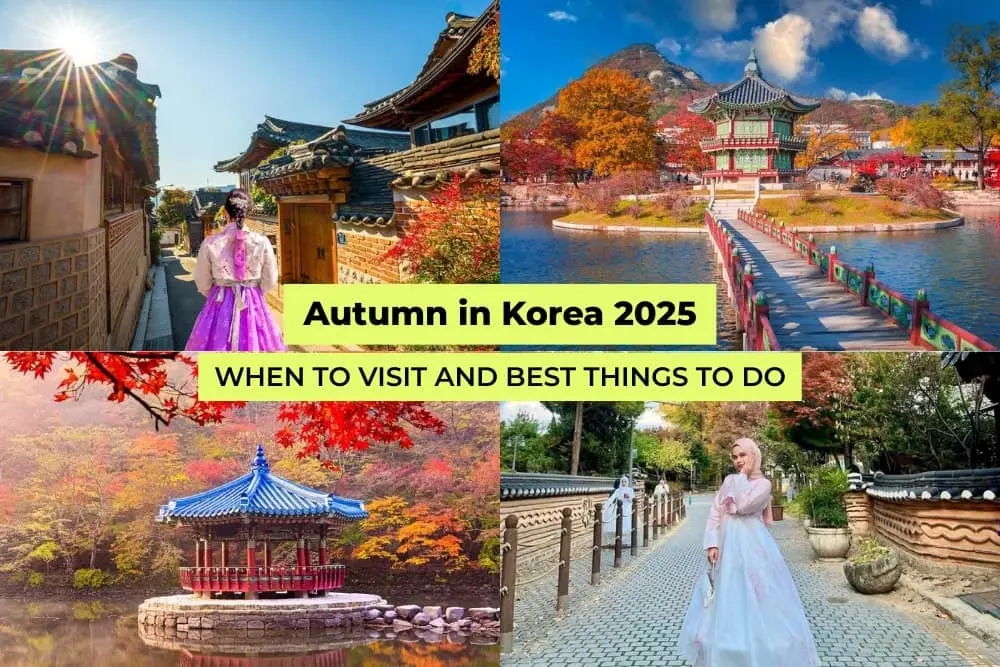
Autumn season in Korea is nothing short of magical — golden ginkgo, fiery maples, and a festive energy all around. It’s one of Asia’s top fall destinations, mixing stunning scenery with seasonal food and traditions.
Here, you’ll find the best places to see the leaves, what to eat and wear, and must-do autumn experiences — from palace strolls to walks in the forest.
When is Autumn in Korea?
In South Korea, autumn runs from September to November, with each month offering a different vibe.
The best time to visit is mid-October to early November, when the whole country glows with fall hues.
Want to know where and when the autumn leaves will turn red? Here are the predicted months.
Region | Peak Dates (2025) |
|---|---|
Seoraksan / Gangneung | 20–25 Oct |
Seoul | 26–31 Oct |
Suwon / Incheon | 27 Oct – 2 Nov |
Chuncheon | 25–30 Oct |
Daejeon | 27 Oct – 2 Nov |
Cheongju | 27 Oct – 2 Nov |
Jeonju | 28 Oct – 3 Nov |
Gwangju | 28 Oct – 3 Nov |
Busan | 29 Oct – 5 Nov |
Daegu | 29 Oct – 5 Nov |
Pohang | 30 Oct – 5 Nov |
Yeosu | 1 – 7 Nov |
Seogwipo / Jeju | 2–8 Nov |
Note: These are just predictions, based on past weather patterns — though of course, Mother Nature might have other plans.
Korea’s Autumn Weather: What to Expect (and What to Wear)
During the fall, Korea is mild and comfortable, but the weather shifts as the months go by. September feels warm and summery, while November brings chilly nights and crisp air.
Check out this month-by-month guide with average temperatures and weather notes — so you’ll know exactly what to expect for your trip.
Month | Average High (°C) | Average Low (°C) | Weather at a Glance |
|---|---|---|---|
September | ~25 °C | ~16 °C | Warm days, cool nights; late-summer feel. Low chance of rain, as monsoon season is over. |
October | ~19 °C | ~9 °C | Crisp, sunny, peak colours. |
November | ~11 °C | ~2 °C | Cold, late autumn; possible snow by month’s end. |
Depending on what month you choose to visit South Korea, the wardrobe you pack will vary. It’s best to pack according to the month you’re visiting, as autumn temperatures change quickly.
Photo: @wondergenny on Instagram
To help you, here's a guide on what to wear during your fall trip to Korea.
Month | What To Wear | Suggestions |
September | T-shirts, blouses, light cardigans or denim jackets, comfortable trainers for city walks. | Uniqlo (Airism layers), 8Seconds (Korean fashion), Nike |
October | Long sleeves, jeans, light sweaters, trench coats. | Muji, TopTen (Korean brand), Zara |
November | Sweaters, knitwear, padded jackets, scarves, thermal layers if heading to the mountains. | Beanpole Outdoor (Korean brand), The North Face Korea, Columbia |
Pro tip: While autumn is relatively dry, it wouldn't hurt to bring a pocket umbrella or rain coat in case of an odd shower. It's also best to pack sunglasses and sunscreen since the sun is bright and days are long during the season.
Best Places to Visit in Korea During Autumn
Spending fall in Korea isn’t just about the fall foliage — it’s where history, nature, and food come together.
You might hike through crimson mountains, stroll palace gardens framed by ginkgo trees, or snack on authentic grub at a seasonal market. From ancient temples to coastal escapes, every corner offers a different flavour of fall.
Without further ado, here are some of the best places to soak in Korea’s seasonal beauty this 2025.
Autumn in Seoul: Palaces, Parks, and City Views
1. Gyeongbokgung Palace
Fulfil your K-drama fantasy at Gyeongbokgung Palace, one of Seoul’s most iconic autumn spots. Stroll through courtyards framed by ginkgo and scarlet maples, with Bugaksan Mountain as a backdrop.
For an extra splash of colour, you can rent a hanbok and capture photos among the palace gates and gardens — visuals straight out of a historical drama.
Beyond the foliage, don’t miss the changing-of-the-guard ceremony or nearby Insadong.
How to get there: Head over to Gyeongbokgung Station (Line 3, Exit 5). You can also ride the Gwanghwamun Station (Line 5, Exit 2).
Entrance: KRW3,000 (USD2). However, if you show up wearing hanbok, entrance is free.
Tips: Arrive early to avoid tour groups and get the best photos.
2. Changdeokgung Palace
For a royal autumn stroll, visit Changdeokgung Palace, one of Seoul’s most beautiful heritage sites and a UNESCO World Heritage treasure.
The Secret Garden (Huwon) is especially stunning in autumn, with lotus ponds, pavilions, and pathways framed by crimson maples and gleaming ginkgo trees.
To make the visit extra memorable, you can rent a hanbok nearby — wearing traditional dress gives you free entry and makes for stunning photos against the palace’s colourful backdrops.
The palace grounds blend history and nature, making it a quieter, more romantic alternative to nearby Gyeongbokgung. With its centuries-old architecture set against vibrant foliage, Changdeokgung is a photographer’s dream in October.
How to get there: Anguk Station (Line 3, Exit 3). A short walk to the palace.
Entrance: KRW3,000 (USD2) for palace, KRW5,000 (USD4) for Secret Garden tour.
Tips: Book the Secret Garden tour in advance — spots are limited and sell out quickly in autumn.
3. N Seoul Tower
Looking for panoramic views for your IG grid? Check out N Seoul Tower on Namsan Mountain.
Take the cable car or hike up tree-lined trails glowing with ginkgo and maples, then enjoy skyline views framed by blazing foliage from the tower’s observation decks.
Couples often leave love locks here, while the tower itself offers exhibitions, restaurants, and evening light shows — making it one of Seoul’s most atmospheric autumn spots.
How to get there: Myeong-dong Station (Line 4, Exit 3). Walk to the cable car station, then ride up to Namsan. You can also hike the Namsan trails directly.
Entrance: KRW21,000 (USD15). Namsan Park trails are free
Tips: Visit on a weekday morning to skip crowds.
4. Bukchon Hanok Village
In Bukchon Hanok Village, tradition meets autumn charm.
Nestled between Gyeongbokgung and Changdeokgung, this hanok neighbourhood transforms into a picture-perfect scene with ginkgo trees and tiled rooftops. To fully immerse yourself in the sights, a walking tour would be your best bet.
It’s one of the best places to experience old-world Korea in the heart of Seoul, with tea houses, craft shops, and cultural centres offering everything from calligraphy to kimchi-making.
How to get there: Anguk Station (Line 3, Exit 2). A 10-minute walk to the village.
Entrance: Free
Tips: Be mindful that Bukchon is a residential area (people actually live here) — keep noise down when exploring the lanes. Tourists are not allowed in the area from 5pm to 10am.
5. Haneul Park
Photo: @genesia.synclaire on Instagram
For sweeping fields of silvergrass against Seoul’s skyline, visit Haneul Park. Built on a reclaimed landfill turned eco-park, it’s now one of the city’s most beloved autumn spots.
Each October, the park hosts the Seoul Silver Grass Festival, when its hills transform into a golden sea of reeds glowing in the sunlight.
The park’s elevated trails and observation decks offer panoramic views of the Han River and Namsan Tower, especially beautiful at sunset. With its wide-open fields, Haneul Park is a favourite for photoshoots and quiet autumn strolls — making it one of the most unique things to do in Seoul.
How to get there: World Cup Stadium Station (Line 6, Exit 1). From there, take the park shuttle or climb the staircase to the top (about 300 steps).
Entrance: Free.
Tips: Visit at sunset for the best light over the silvergrass.
6. Eunpyeong Hanok Village
For a quieter alternative to Bukchon, head to Eunpyeong Hanok Village at the foot of Bukhansan Mountain. This newer hanok village blends traditional Korean architecture with a stunning natural backdrop, especially in autumn when the mountain slopes turn crimson and gold.
The peaceful lanes are lined with cafés, museums, and cultural centres, making it a relaxed spot to enjoy hanok charm without the heavy crowds of central Seoul. With Bukhansan National Park right behind, you can easily combine a village stroll with a short autumn hike — a hidden gem to add to any Seoul itinerary.
How to get there: Gupabal Station (Line 3), then bus 7211 or 7723 to Eunpyeong Hanok Village.
Entrance: Free
Tips: Stop by Jingwansa Temple nearby for a cultural add-on to your visit.
7. Bukhansan Mountain
For one of the best autumn hikes near Seoul, head to Bukhansan Mountain. Just north of the city, this national park is known for its granite peaks, forested trails, and sweeping views over Seoul.
Whether you take a short walk to a temple or challenge yourself with the climb up Baegundae Peak (the highest summit) with a hiking tour, the mountain offers routes for all levels. It’s also a favourite spot for locals looking to escape the city without travelling far.
How to get there: Gupabal Station (Line 3) or Bukhansan Ui Station (Ui-Sinseol Line), then local buses to the park entrances.
Entrance: Free
Tips: Trails can be steep — wear sturdy shoes and bring water
8. Seoul Forest Park
For a blend of city life and autumn nature, head to Seoul Forest Park. Often called Seoul’s version of Central Park, it’s one of the city’s largest green spaces and transforms beautifully each fall with ginkgo trees, fiery maples, and wide tree-lined paths perfect for a stroll or bike ride.
Beyond the foliage, the park is home to deer enclosures, butterfly gardens, and art installations, making it a popular escape for both locals and visitors. With its spacious lawns and riverside trails, it’s also a great spot for a relaxed picnic.
How to get there: Seoul Forest Station (Bundang Line, Exit 3). A short walk to the park entrance.
Entrance: Free
Tips: Bring snacks and enjoy an autumn picnic under the trees.
9. Namhansanseong Fortress
For a mix of history and mountain scenery, visit Namhansanseong Fortress just outside Seoul.
Once a defensive stronghold during the Joseon Dynasty, its fortress walls and pavilions are surrounded by autumn hues and amber ginkgo trees each autumn.
A trip here can easily be paired with cultural stops nearby, such as the royal tomb of King Sejong (a UNESCO site honouring Korea’s most revered monarch) and the Icheon Ceramic Art Village, where you can see traditional pottery making in action.
How to get there: About 1 hour from Seoul by subway to Sanseong Station (Line 8), then local bus or taxi to the fortress entrance.
Entrance: Free (some pavilions may have small fees).
Tips: Wear comfortable shoes — trails along the fortress walls involve some uphill walking.
Beyond Seoul: National Parks, Villages, Temples
10. Nami Island
Photo: @wanderwithgaby on Instagram
Step into a scene from Winter Sonata at Nami Island.
Nami Island is one of the easiest day trips from Seoul. Its tree-lined paths glow with autumn colours, perfect for couples, families, or anyone with a camera.
Rent a bike or stroll the colourful avenues, then refuel at riverside cafés and food stalls serving autumn treats like hotteok (Korean sweet pancakes) and roasted chestnuts.
With K-drama filming spots and art installations scattered throughout, Nami Island is a dreamy fall escape. If you plan to extend your trip, you might even witness the island turning into a winter wonderland.
How to get there: The easiest way to get to Nami Island is through a tour. However, if you want to take public transport, ride the ITX train from Yongsan or Cheongnyangni Station to Gapyeong (~1hr), then take a 5 minute taxi or shuttle bus to the ferry terminal. Then, take a ferry into Nami Island.
Entrance: KRW16,000 (USD12). Entrance includes round-trip ferry
Tips: Renting a bike is the best way to see the island.
11. Garden of Morning Calm
For one of Korea’s most picturesque gardens, head to the Garden of Morning Calm in Gapyeong. This beautifully landscaped park is famous for its themed gardens, walking paths, and ponds that glow with vibrant maples and yellow ginkgo each autumn.
Every corner feels like a postcard, making it one of the most photogenic autumn spots near Seoul. It’s also a perfect pairing with nearby Nami Island and Petite France.
How to get there: About 2 hours from Seoul by ITX to Cheongpyeong Station, then shuttle bus or taxi to the garden.
Entrance: KRW11,000 (USD8)
Tips: Visit on a weekday morning to avoid crowds.
12. Beomeosa Temple
For a peaceful autumn escape in Busan, head to Beomeosa Temple. Its courtyards glow with crimson maples and blazing ginkgo, set against the slopes of Geumjeongsan.
It’s also a great base for exploring nearby temples — including Hongbeopsa Temple, known for its towering golden Buddha and peaceful grounds.
Beomeosa itself offers cultural treasures, meditation programs, and scenic hiking trails that blend nature with tradition.
Photo: @superbear_reborn on Instagram
How to get there: Beomeosa Station (Line 1, Exit 5 or 7), then bus 90 to the temple entrance. Hongbeopsa Temple is a 25-minute drive or bus ride away.
Entrance: Free, but a small donation to the temple is highly encouraged
Tips: Pair your visit with Hongbeopsa Temple for a full-day autumn itinerary.
13. Naejangsan National Park
Photo: @kochamcie98 on Instagram
For a true maple leaf paradise experience, visit Naejangsan National Park in Jeolla Province.
Some places you need to check out include Naejangsa Temple, framed by seasonal leaves, and Uhwajeong Pavilion, mirrored in a pond of autumn colours.
With easy trails, shuttle buses, and even a cable car to panoramic viewpoints, it’s a beginner-friendly park. Seasonal stalls selling hot chestnuts and local snacks make it a perfect autumn day trip.
How to get there: From Seoul, take the KTX to Jeongeup Station (~1.5hrs), then a local bus or taxi to the park entrance.
Entrance: KRW3,000 (USD2)
Tips: Visit on weekdays to avoid the crowds. The cable car offers one of the best bird’s-eye views of the autumn canopy.
14. Haeundae River
For autumn views by the water, head to Haeundae River (also known as Suyeong River) in Busan. Its banks glow with seasonal colours set against the city skyline.
The best way to experience it is by hopping on a river cruise — gliding past golden trees, glittering bridges, and waterfront landmarks. Many cruises also feature night views of Gwangandaegyo Bridge, live music, or themed dining, making it both scenic and atmospheric.
How to get there: Haeundae Station (Line 2, Exit 5). Walk 10 minutes to Mipo or cruise terminals along Suyeong River.
Entrance: Around KRW25,000–35,000 (USD18-25) per adult (varies by operator)
Tips: Bring a light jacket — evenings on the river can get chilly in autumn.
15. Odaesan National Park
If you’re a K-drama fan, don’t miss Odaesan National Park in Gangwon Province.
Each autumn, its slopes glow with glowing maples and stunning ginkgo, especially along Woljeongsa Temple’s scenic fir tree trail — a filming site for the drama Goblin.
It’s also best experienced on a guided day tour from Seoul, making the journey stress-free and ensuring you see the park’s highlights.
Beyond the fall leaves, Odaesan offers tranquil temples, forested hikes, and the quiet charm of Korea’s countryside.
How to get there: Around 2.5 hours by bus from Seoul to Jinbu, then a short local bus/taxi ride. Day tours are the easiest and most convenient option.
Entrance: KRW3,000 (USD2)
Tips: Don’t miss the Woljeongsa Temple trail — the most famous Goblin filming site.
16. Seoraksan National Park
For Korea’s most dramatic autumn scenery, head to Seoraksan National Park in Gangwon Province.
Highlights include Sinheungsa Temple, the striking Ulsanbawi Rock, and a cable car with sweeping mountain views.
It’s best enjoyed on an organised autumn foliage tour, which handles transport and guides you to the most scenic spots. With waterfalls, varied hiking trails, and tranquil temples, Seoraksan is the perfect mix of adventure and culture.
How to get there: About 2.5 hours by bus from Seoul to Sokcho, then local bus or taxi to the park entrance. Tours are the easiest way to visit in peak season.
Entrance: KRW3,500 (USD3)
Tips: Bring layers as mountain weather changes quickly.
17. Jangtaesan Recreational Forest
For a quieter autumn escape, visit Jangtaesan Recreational Forest near Daejeon.
The easiest way to immerse yourself in the fall colours is through an autumn leaves tour, which makes reaching this off-the-beaten-path forest simple from Seoul or Daejeon. With peaceful trails, eco-learning spaces, and meditation areas, Jangtaesan is as restorative as it is scenic.
How to get there: About 2 hours from Seoul by KTX to Daejeon, then a local bus or taxi to Jangtaesan. Many autumn tours include direct transfers.
Entrance: Free
Tips: Arrive early to enjoy quieter trails before the crowds.
18. Jeonju Hanok Village
Photo: @titaritonga_ on Instagram
Step back in time at Jeonju Hanok Village, home to over 700 preserved hanok houses.
For the full experience, you can rent a hanbok from Hanboknam Shop and capture timeless photos against tiled rooftops and colourful leaves. Jeonju is also the birthplace of bibimbap and a UNESCO City of Gastronomy, so come hungry to enjoy its famous food stalls and restaurants.
Want to know what else you can do in Jeonju? Check out our things to do in Jeonju guide for a personal look at what to expect in this foodie heaven.
Photo: @t__gooon on Instagram
The village is home to several food stalls and authentic restaurants, giving you a taste of what Korea has to offer.
Beyond the foliage, tea houses, craft shops, and museums showcase local heritage. It’s such a beloved destination that travellers return in spring for cherry blossom season.
How to get there: About 1.5 hours by KTX from Seoul to Jeonju Station, then a short taxi or local bus to the village.
Entrance: Free
Tips: Come hungry — Jeonju’s food stalls and restaurants are a must.
19. Jirisan National Park
For sweeping autumn landscapes, head to Jirisan National Park, Korea’s largest mountain park.
Highlights include temple stays at Hwaeomsa Temple, panoramic hikes along the Baemsagol Valley, and sunrise views from Nogodan Peak. With well-marked trails of varying difficulty, Jirisan is perfect for both casual walkers and seasoned hikers.
How to get there: About 3 hours from Seoul by KTX to Gurye or Namwon, then bus or taxi to park entrances.
Entrance: Free
Tips: Jirisan covers a huge area — join a guided hike or temple stay to make the most of your visit.
20. Songnisan Mountain
Photo: @eric_vanwilderman
For a mix of dramatic peaks and temple culture, visit Songnisan Mountain in North Chungcheong Province. Famous for its rugged granite cliffs and dense forests, the park bursts into vivid reds and golds each autumn. Trails wind past waterfalls, scenic ridges, and tranquil valleys, making it a rewarding destination for hikers.
At the base, you’ll find Beopjusa Temple, home to a towering golden Buddha and centuries-old pagodas — the perfect cultural stop before or after a hike.
How to get there: About 3 hours from Seoul by bus to Songnisan Bus Terminal, then walk or take a shuttle to park entrances.
Entrance: KRW3,000 (USD2)
Tips: Combine a temple visit with a moderate hike for the best balance of culture and scenery.
Autumn in Jeju: Islands and Volcanoes
21. Hallasan Mountain
On Jeju Island, no autumn trip is complete without Hallasan Mountain. A UNESCO World Heritage site and Korea’s highest peak, its volcanic slopes blaze with red maples and golden oaks each fall.
The best way to experience it is on a hiking course or guided tour, giving you close-up views of the foliage and insight into the mountain’s ecology.
With crater lakes, lava formations, and diverse wildlife, Hallasan is not just a scenic hike but a cultural and natural treasure of Korea. For those wanting to try climbing Hallasan, check out our hiking guide for everything you need to know.
How to get there: From Jeju City, take bus 281 to Seongpanak or Gwaneumsa trailheads (~30–40 minutes).
Entrance: Free (guided hiking tours may charge fees)
Tips: Bring layers — weather can shift quickly at higher altitudes.
22. Sangumburi Crater
Photo: @dj.dia on Instagram
On Jeju Island, Sangumburi Crater offers a unique twist on autumn scenery.
This dormant volcanic crater bursts into life each fall with silvergrass fields, crimson maples, and golden oaks, creating sweeping, photogenic views.
It’s also easy to pair a visit here with nearby Jeju Stone Park, where volcanic heritage meets art and culture. With gentle walking paths and rare plant life, Sangumburi is both accessible and unforgettable.
How to get there: From Jeju City, take bus 710 or drive 30 minutes to Sangumburi Crater. Jeju Stone Park is just 10 minutes away by car.
Entrance: KRW6,000 (USD4)
Tips: Visit in the late afternoon for golden-hour light over the silvergrass.
Getting Around Korea in Autumn
Korean Train Express (KTX)
Travelling in Korea during autumn is easy, though popular foliage spots can get crowded. Plan ahead and you’ll dodge most of the rush.
The best way to explore is by train — KTX connects Seoul to cities like Busan, Gyeongju, and Jeonju in just hours. For multiple stops, consider a KORAIL Pass — it gives you unlimited train travel for a set number of days and can save both time and money.
Here are a few practical tips for getting around during autumn:
Go early or late: Trails and palaces are busiest 10am–3pm. Aim for mornings or sunset for fewer crowds.
Use public transport: Trains and buses beat traffic; shuttles run to parks like Naejangsan and Seoraksan.
Book ahead: Reserve KTX, tours, and cable cars early — autumn is peak season.
Stay nearby: Overnight in Sokcho (Seoraksan) or Jeongeup (Naejangsan) to enjoy parks before day-trippers arrive.
Join a tour: For harder spots like Odaesan or Jangtaesan, guided day tours from Seoul are the easiest option.
Celebrating Autumn Festivals in Korea
There's more to do than just admire the autumn foliage this season. As the harvest season rings in Korea, so do several unique festivals that celebrate everything from flowers to food.
If you're planning a trip to the country during this time, you might want to explore some special fall festivities that you can enjoy. It will take your cultural experience to a whole new level.
Festival | Dates (2025) | Where | What to Expect |
Masan Gagopa Chrysanthemum Festival | 1–9 Nov | Changwon | Chrysanthemum displays, “Retro Zone” for traditional exhibits, “Newtro Zone” with food stalls & youth programs |
Gwangju World Kimchi Festival | 31 Oct–2 Nov | Gwangju | Taste & buy kimchi, kimchi master competitions, hands-on workshops |
Chuseok (Korean Mid-Autumn Festival) | 6 Oct | Nationwide | Families gather, honour ancestors, eat songpyeon (half moon-shaped) rice cakes; Incheon Chinatown hosts lanterns, lion dances & mooncakes |
Jinju Namgang Lantern Festival | Early–mid Oct | Jinju | Hundreds of lanterns floating on the river & fortress walls; visitors can make & release their own lanterns |
It's Time To Plan Your Korea Trip
From palace gardens to mountain peaks, fall in Korea is a season of blazing foliage, crisp air, and cultural charm at every turn.
Whether you’re strolling hanok villages, hiking national parks, or tasting seasonal street food, this is one of the best times to experience Korea at its most colourful and festive. So pack your bags, rent a hanbok, and get ready to fall in love with autumn in Korea.