Tokyo might feel overwhelming at first. But getting into the city doesn’t have to be.
If you’ve been googling how to get from Haneda Airport to Tokyo, don’t worry. You’re not alone.
The good news? It’s super easy.
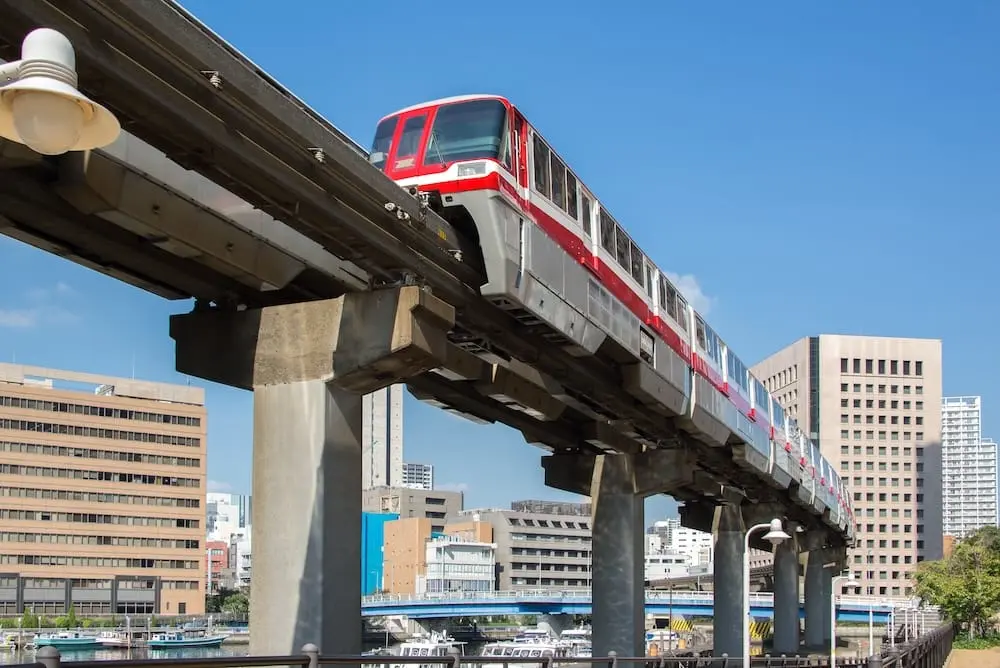
Enter the Tokyo Monorail: quick, scenic, and totally JR Pass-friendly.
Officially known as the Tokyo Monorail Haneda Airport Line, this straddle-beam, Alweg-style monorail gets you from the airport to the city centre in under 20 minutes.
This guide covers everything you need to know especially if it’s your first time in Japan.
First Things First: What Is the Tokyo Monorail?
Photo: @yogahyg on Instagram
Mention Tokyo’s icons and most people picture the Skytree or maybe Tokyo Disneyland.
But right up there with them is the Tokyo Monorail.
It’s more than just a convenient airport link. It’s a slice of Tokyo history, too.
Launched in 1964, right before the Tokyo Olympics, the monorail was one of the world’s first commercial services of its kind.
And it’s still going strong today.
These days, it’s a favourite ride for visitors and locals alike thanks to its skyline views, sleek design, and the pure satisfaction of gliding above Tokyo Bay.
And if the skies are clear, you might even catch a glimpse of Mount Fuji. How cool is that?
Psst...try to spot the impressive Tokyo Tower if you can!
Tokyo Monorail Route & Stops: Where It Goes
As far as monorail systems go, the Tokyo Monorail is impressively long.
It runs along a 17.8-kilometre route from Haneda Airport to downtown Tokyo.
Compare that with the Sentosa Express in Singapore at 2.1 kilometres, or the Las Vegas Monorail at 6.3 kilometres. And, well, you get the picture.
The Tokyo Monorail also serves 11 stations, including all three Haneda terminals: Terminal 1, Terminal 2, and Terminal 3 (for international flights).
To help you visualise it, here’s the Tokyo Monorail route map:
Photo: Official Tokyo Monorail website
Pro tip: Need help planning your trip from Haneda to Hamamatsucho Station or beyond? You can always check the Tokyo Monorail timetable on the official website.
Riding from Haneda Airport to Hamamatsuchō Station
From the airport, the line zips northward along the waterfront, making a few local stops before arriving at Hamamatsuchō Station, where it terminates.
The great thing about this? It’s an ultra-convenient gateway to the city centre.
Hamamatsucho Station connects to two JR East lines: the circular Yamanote Line and the Keihin-Tōhoku Line. There’s also the nearby Daimon subway station, where you can hop onto the Toei Asakusa Line or Oedo Line.
In any case, the monorail is a superb way to kickstart your journey in the massive metropolis that is Tokyo.
Other Key Stations Along the Line
Tennozu Isle - A transfer point for the Rinkai Line, which heads toward the Odaiba waterfront.
Ōi Keibajō-mae - Located in front of the city’s horse racetrack. It’s also home to Tokyo’s biggest flea market, held nearly every weekend in the nearby parking lot.
Ryūtsū Center - A quieter stop in the Heiwajima industrial neighbourhood.
Tenkūbashi - A lesser-known station near the scenic Tamagawa Sky Bridge, often overlooked by visitors.
Tokyo Monorail's Operating Hours & Timetable
What Time Does the Tokyo Monorail Open?
You can hop on the Tokyo Monorail throughout most of the day. It runs daily from 5am to 11:30pm.
And good news for time-pressed travellers: trains run frequently, with over 500 services a day. Departures from Haneda Airport happen every four minutes, increasing to every three minutes during rush hour.
So, no need to stress about timetables; you’re pretty much always covered.
What Time Is the Last Tokyo Monorail?
The last train from Haneda Airport’s Terminal 3 departs at 11:48pm.
From the other end, at Hamamatsuchō Station, the final service leaves at 11:45pm.
These times are accurate as of 25 July 2025.
How Fast Is the Tokyo Monorail?
The best part? It’s quick.
While the full journey from Haneda Airport to central Tokyo usually takes about 20 minutes, the fastest Haneda Express train can do it in as little as 13 minutes.
There’s a small catch, though:
These express services only run periodically and stop only at the airport terminals, skipping all intermediate stations.
The local all-stop trains take about 20-22 minutes for the full journey. Still fast, reliable, and scenic, especially with views of Tokyo Bay along the way.
Tokyo Monorail Cost: Fares & How to Pay for Tickets
Tokyo Monorail Fare Table
Photo: Official Tokyo Monorail website
Photo: Official Tokyo Monorail website
Can I Use the JR Pass on the Tokyo Monorail?
Yes, you absolutely can. If you're planning to travel beyond Tokyo - maybe even to opposite ends of the country - then a nationwide JR Pass is a great option.
With it, you won’t need to buy a separate ticket for the Tokyo Monorail, as it’s fully covered.
All you need to do is show your JR Pass at the manned gate.
Pro tip: The automatic ticket gates won’t accept the JR Pass, so look for a station attendant booth.
No extra costs. No reservations required.
Your airport trip from Haneda Airport to Tokyo? Practically stress-free.
What About IC Cards Like Suica for the Tokyo Monorail?
Photo: @yogahyg on Instagram
Not planning to get a JR Pass? Totally understandable.
Unless you’ve got a JR Pass itinerary that really justifies the cost, it might not be worth it. The pass isn’t exactly cheap.
But no worries if you're skipping it.
Another great option? IC cards like Suica.
If you already have one pre-loaded from a previous trip to Tokyo, even better.
Just tap in and out. Your fare gets deducted automatically.
IC cards are super convenient and can even save you a few yen. The fare is 519 yen with an IC card versus 520 yen with a paper ticket.
Sure, it’s just 1 yen, but hey - every yen counts, right?
And speaking of counting - if you’re not a fan of juggling coins (and Japan has a lot of them), an IC card is a lifesaver.
More importantly, it’s a smart investment if you’ll be in Tokyo for a while.
It works on nearly all trains, subways, and buses throughout the city.
That said, if you're really looking to maximise savings, you might consider a Tokyo Subway Pass, which gives you unlimited rides on all Tokyo Metro and Toei Subway lines for a fixed duration.
It often works out cheaper than an IC card if you’re sticking to subways because everything’s prepaid.
The catch? You can’t use the Tokyo Subway Pass on the Monorail.
What About Just the Monorail Ticket?
Not planning to get a JR Pass and not keen on using a Suica? No worries. Buying a regular Tokyo Monorail ticket is quick and easy.
Just head to the ticket vending machines at any Monorail station. They offer English language options, and the process is super straightforward. Simply select “Hamamatsuchō” or your destination station of choice, and follow the prompts.
The machines accept cash and support IC card top-ups but credit cards are not accepted, so bring yen if you're buying a paper ticket.
At Haneda Airport, finding the Monorail station is easy:
From Terminal 3, follow the signs to the Monorail Station building, connected by a walkway.
In Terminals 1 and 2, the Monorail is located on B1, right next to the Keikyu Line.
The JR East Travel Service Center is also conveniently located near the Monorail entrance at Terminal 3. Handy if you need help or want to exchange a JR Pass voucher before riding.
As mentioned, the Tokyo Monorail fare is roughly 520 yen for adults and 260 yen for children (accurate as of 25 July 2025).
Shorter rides - like transferring between terminals - will cost less.
Once you’ve got your ticket, just insert it at the gate to enter.
You’ll either retrieve it at your destination or the gate will collect it when you exit.
Pro tip for families: The Tokyo Monorail is super kid-friendly - children under 6 ride free with an adult, and those aged 6-11 travel for half-price.
Great Alternative Passes Worth Considering
If you’re planning day trips or short excursions from Tokyo - like to Kamakura, Yokohama, or Nikko - the JR East Pass is a great pick.
It gives you 5 flexible days of unlimited travel on eligible JR East lines, including the Tokyo Monorail.
Want the full breakdown? We’ve got a complete guide on how to use the JR East Pass.
Just transiting through Tokyo? There’s a smaller but super handy option.
The Monorail & Yamanote Line Discount Ticket covers a one-way ride on the Tokyo Monorail (Haneda to Hamamatsuchō) plus unlimited rides for the day on the JR Yamanote Line. But note that it's only available on weekends, public holidays, and selected periods.
It’s perfect for a short layover, a full day of exploring, or just getting around without straying too far from the airport.
Tokyo Monorail vs Keikyu Line: Which Is Better from Haneda Airport?
Factor | Tokyo Monorail | Keikyu Line |
|---|---|---|
JR Pass Coverage | ✅ Fully covered - great if you have one | ❌ Not covered |
Ease for First-Timers | ✅ Foolproof - one line, one direction | ⚠️ More complex - shared tracks, check destination signs |
Scenic Ride | ✅ Elevated with views of Tokyo Bay - fun and relaxing | 🚫 Mostly underground - more functional than scenic |
Luggage Space | ✅ Designed for travellers - dedicated racks and open space | 🚫 Standard commuter train - less room for suitcases |
Best For | JR Pass users, Tokyo Station area, first-timers | Direct access to Shinagawa, Asakusa, or experienced commuters |
Travel Time | 18 mins to Hamamatsuchō (Yamanote Line) | 15-18 mins to Shinagawa (Shinkansen, Yamanote Line, Asakusa Line access) |
Quick Take:
Choose Tokyo Monorail if you're a JR Pass holder, want an easy, scenic ride, or you're heading to the Tokyo Station area.
Choose Keikyu Line if you're going to Shinagawa, Asakusa, or prefer a more direct route into eastern Tokyo.
What the Tokyo Monorail Is Like Inside (And Where to Store Your Luggage)
Wondering what the Tokyo Monorail interior is like? Especially when it comes to handling luggage?
You’re in luck: you’ve got nothing to worry about.
There are large luggage storage areas, overhead racks, and even designated spaces near the doors for big suitcases complete with straps to secure them.
Just like other limited express or rapid trains in Japan, it’s built with travellers in mind.
And here’s the perk of taking the Monorail instead of squeezing into a busy city subway: You’ll avoid the usual commuter crush. No sardine-can situations here especially outside rush hour.
Travelling with kids? You’ll definitely appreciate the breathing room.
As for the seating layout, you’ll find a mix of forward- and rear-facing seats at both ends of each car.
Some seats even offer a view out the front or rear window, which is always a hit with train fans.
And true to Japan’s standards, the cabins are clean, modern, and thoughtfully designed.
Just don’t expect plush, reclining luxury. It’s a short urban connection after all.
Accessibility and Station Comforts
When it comes to station access, the Tokyo Monorail delivers.
Every station is equipped with elevators and escalators linking the concourse and platforms. Perfect for travellers with large bags or limited mobility.
Pushing a stroller or using a wheelchair? No problem! Station staff are happy to help.
All platforms are fitted with screen doors, so there’s no need to worry about little ones getting too close to the edge.
And here’s something cool: the Tokyo Monorail is even considered “snow-resistant”, with a strong record of running reliably during rough weather.
Now that’s a solid piece of engineering.
Ride Quality
As for the journey itself? It’s smooth, quiet, and super steady - the kind of peaceful ride you only get in Japan.
The monorail glides gently over its elevated concrete beam with just a soft hum beneath you.
Train geeks, take note: this is a ride to savour.
What It’s Like to Ride the Tokyo Monorail
Riding the Tokyo Monorail isn’t just practical. I’s surprisingly fun!
This straddle-beam train glides above ground through canals, industrial zones, and highways. From the airport, you’ll spot planes taking off. And if the skies are clear, a fab peek at the Tokyo skyline.
Also, from 2020 to 2024, the Tokyo Monorail featured a Kiki & Lala (Little Twin Stars) themed train wrapped in pastel stars and sweet illustrations. While it's no longer in service as of 2025, it remains a fan favourite - and a fun part of the line’s history.
Pro tip: Head to the front or back of the train for a windshield view of the track ahead. It’s like riding up front with the driver.
Wrapping Up: From Haneda Airport Terminal to the Heart of Tokyo (and Beyond)
Whether you’re zipping from Haneda Airport Terminal 1 to Hamamatsuchō Station, transferring at Tenkūbashi Station, or passing through Tennozu Isle, this rail service with airport access makes your arrival smooth and scenic.
So grab your pass, check the platform signs, and enjoy one of the best ways to travel between Haneda Airport and Tokyo.
Need more details? Just look out for the multilingual ticket machines at any of the monorail stations. You’ll be on your way in no time.
Plan Your Japan Journey Like a Pro
Looking for more tips on getting around Tokyo? Here’s how to navigate trains, subways, and the JR network like a pro.
Need help with your JR Pass reservation? Learn how to book seats, activate your pass, and make the most of it across Japan.
Flying into Narita Airport instead of Haneda? Check out your best transport options from Narita to central Tokyo.