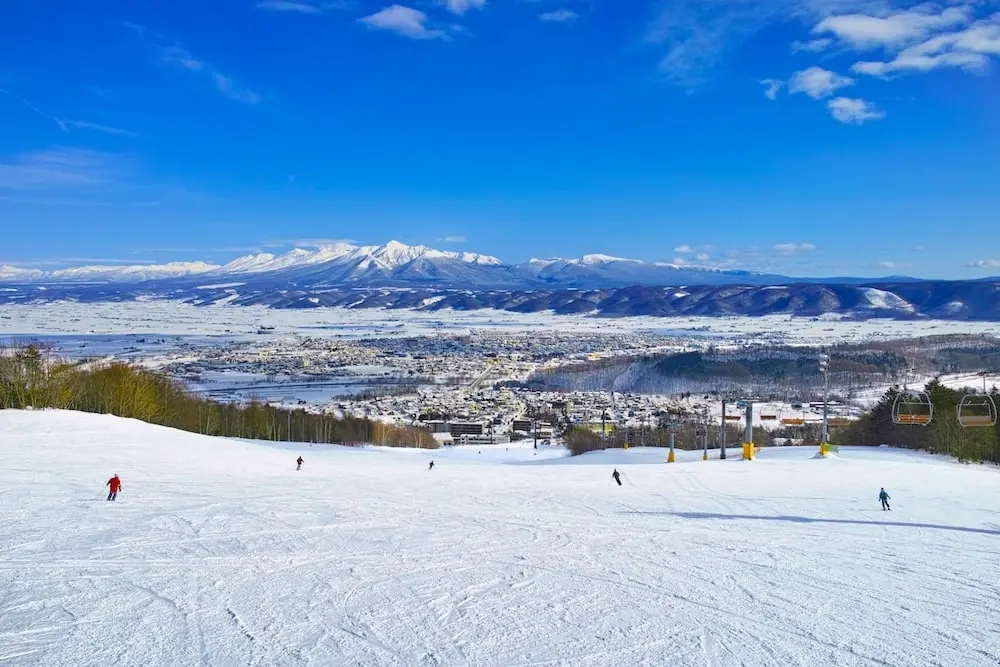
"Winter wonderland” might sound like a cliché, but if anywhere truly lives up to that name, it’s Hokkaido.
Think soft, powdery snow, and icy landscapes that wouldn't look out of place in a Frozen movie. Not forgetting that crisp winter air that makes a steaming bowl of ramen taste even better.
Japan’s northernmost island transforms into a dreamy escape during winter, with the capital Sapporo turning into one of the snowiest cities in the world.
If you're wondering where to go in Hokkaido in winter, here’s an itinerary to help you make the most of your adventure:
Location | Activities |
|---|---|
Sapporo (Day 1) Once you arrive in Sapporo, getting around is easy with a Kitaca card. If you have the JR Hokkaido Pass, you can reach the city from New Chitose Airport on the Rapid "Airport" in under 37 minutes. | 10am: Check out the gorgeous view of Odori Park from the Sapporo TV Tower (we recommend pre-booking your tickets for peace of mind). 12pm: Wander around Nijo Market for some fresh seafood – check out Ohiso Nijo Market for oysters and delicious seafood dons. 3pm: Visit the Sapporo Beer Museum – don’t forget to try jingisukan, a Japanese grilled mutton dish. 7pm: End off your evening by checking out the seriously impressive snow and ice sculptures at the Sapporo Snow Festival (4 to 11 Feb 2025). |
Location | Activities |
|---|---|
Otaru (Day 2) It's just a 30-minute train ride from Sapporo to Otaru, and is fully covered by the Hokkaido Rail Pass, Sapporo-Furano Area Pass, and Sapporo-Noboribetsu Area Pass. | 9am: Take a stroll along the Otaru Canal (or hop on the EBISUYA rickshaw for some retro Japanese vibes). 11am: Explore Sakaimachi Street and shop till you drop! You can also relax at the exquisite LeTao Pathos (if you manage to get a seat) and visit other cafés, like the Hello Kitty Café or the refined and ultra-romantic Kitaichi Hall, with its 167 vintage lamps. 2pm: Pop into the Otaru Music Box Museum to see some seriously impressive handiwork, and don’t forget to check out the magical Otaru Steam Clock right outside, which plays music. |
Location | Activities |
|---|---|
Hakodate (Day 3) Hop on a 3.5-hour train from Sapporo to Hakodate. | 10am: Catch Goryokaku Park first thing in the morning – it’s truly something special in winter, with its gorgeous star-shaped layout. 1pm: Check out the Kanemori Red Brick Warehouse and its 50 shops, along with the beautiful port views. 5pm: Ride the Hakodate Ropeway for breathtaking sunset views. An alternative is to visit the Hakodate Tropical Botanical Garden to see Japanese macaques soaking in a hot spring, especially if you haven’t visited the one in Nagano yet. |
Location | Activities |
|---|---|
Noboribetsu (Day 4) Take a 1.5-hour train ride from Hakodate to Noboribetsu and soak in the views on the way. | 10am: Explore the volcanic landscapes at Hell Valley (Jigokudani); you can even combine a tour with Lake Toya if you’ve got the time. 8pm: Unwind and end the day at a private ryokan in Noboribetsu Onsen. |
Location | Activities |
|---|---|
Asahikawa (Day 5) It’s just a 2-hour train ride from Noboribetsu to Asahikawa, so you’ll be there before you know it. | 9:30am: Start your day at Asahiyama Zoo and check out some cool animals like wolves, polar bears, and penguins. 1pm: When hunger strikes, head to Asahikawa Ramen Village and dig into a bowl of ramen from one of the eight shops. 3pm: After lunch, take a trip up to Asahidake Onsen, 1,000 metres above sea level, and soak in the stunning views of snow-covered trees and mountains. |
Location | Activities |
|---|---|
Biei & Farm Tomita (Day 6) A 1-hour drive from Asahikawa to Biei, and another 30 minutes to Farm Tomita. | 9am: Take a scenic drive along Biei’s Patchwork Road and stop by the iconic Ken and Mary Tree, which stands alone in the snow and is incredibly Instagrammable. 2pm: Don’t miss Farm Tomita – while it’s known for its summer flower blooms, it’s still quite special in winter with the mountains in the backdrop. 7pm: Visit the stunning Aoi-Ike (Blue Pond), beautifully illuminated from November to April until 9pm, adding an even more magical and ethereal glow to the already enchanting pond. |
Location | Activities |
|---|---|
Shiretoko & Drift Ice (Day 7) A 5-hour drive from Asahikawa to Shiretoko, quite a long journey, so you might want to fly to Memanbetsu Airport and catch a local bus after | 8am: Go on a drift ice cruise in the Okhotsk Sea to witness one of the most spectacular natural sights you'll ever lay eyes on - glistening chunks of ice floating, originating from the Amur River in Russia. 12pm: Did you know you can walk on the drift ice too? Start your journey in the tiny but delightful town of Utoro. 3pm: Visit the Okhotsk Ryūhyō Museum to learn all about drift ice and the creatures of the Sea of Okhotsk. |
At the end of the day, this is just a quick rundown of where we think first-timers can enjoy winter in Hokkaido, hitting all the major highlights.
We've got to add a disclaimer, though: while it is doable, it is a very packed and rushed itinerary, to be honest. So, we recommend factoring in what you truly enjoy and planning your itinerary around that.
If you’ve got more time, there are loads of other cool things to do in the region that you might want to explore and add to your itinerary.
Don’t worry – we’ll cover all of that below:
Top Things to Do in Hokkaido in Winter: More Fun Ideas
Best Hokkaido Ski Resorts: Skiing (Not Walking) in a Winter Wonderland
Heading to Hokkaido in winter?
Then skiing should definitely be on your list. Prince Snow Resorts is a great place to start, with two awesome zones: Furano and Kitanomine, offering 28 trails, 4,000-metre runs, and views of the Daisetsuzan Mountains.
Next, make sure to check out Niseko, one of Japan's top ski spots. It’s made up of three resorts: Grand Hirafu (the biggest, with tons of lifts and a lively town), Niseko Village (home to some great hotels), and Annupuri (a quieter, less crowded gem). If you’re planning to hit all three, grab the Niseko All Mountain Pass to make life easier.
If you prefer something smaller, Moiwa is perfect for beginners, and Rusutsu, just 40 minutes from New Chitose Airport, is definitely worth a visit. Even the Sapporo Kokusai ski resort is a great option for first-timers.
Not into skiing? No problem. Take a lift up Okurayama Ski Jump Stadium for incredible views of Sapporo.
Wherever you decide to go, you’ll be treated to amazing snow and scenery. And if you’re looking for more details, check out our guide to the best ski resorts in Hokkaido.
Drift Ice in Hokkaido: See Frozen Waters Like Never Before
Who says freezing temperatures can’t be fun?
If you're wondering what to do in Hokkaido in winter, why not take a cruise through the Arctic-like drift ice on an icebreaker ship in the Okhotsk Sea?
It’s the southernmost point where the ocean freezes, with ice drifting down from the Amur River in Russia.
Keep an eye out for seals, Steller’s sea eagles and white-tailed eagles perched on drift ice, and maybe even a few Yezo sika deer.
The best time to see the ice is mid-February to early March, although the season has become a bit more unpredictable with climate change, leading to smaller and thinner ice. So, do keep that in mind.
For a more hands-on experience, try a drift ice walk in Utoro, Shiretoko - it’s one of the coolest experiences you could have in Hokkaido in winter.
And don’t miss the Okhotsk Ryūhyō Museum in Abashiri to learn more about this magical place, including all about the drift ice.
Best Hokkaido Winter Festivals to Check Out
75th Sapporo Snow Festival (4 to 11 Feb 2025)
Photo: @villasegram on Instagram
Make your winter trip to Hokkaido unforgettable by visiting the annual Sapporo Snow Festival, held in early February (this year’s festival runs from 4 to 11 Feb 2025).
Marvel at incredible sculptures of all shapes and sizes at Odori Park, from anime characters like Hello Kitty to life-sized jewellery ice art at the vibrant Susukino site.
Photo: @tcj_japaneseschool on Instagram
The festival draws over two million visitors annually, so be sure to plan your trip accordingly - stay updated through the official website for the latest details.
Sapporo White Illumination (Various Dates)
Photo: @cheerela_ on Instagram
As Sapporo city’s biggest winter lighting event, Sapporo White Illumination is a must-see. Get ready for a stunning display of lights with beautifully illuminated art pieces in all shapes and sizes.
The festival takes place at various spots, including the north and south sides of Sapporo Ekimae-dori (until 11 Feb 2025), the south exit of Sapporo Station, Kita 3-jo Plaza (Akapla), and the east and west sides of Minami 1-jo-dori.
The last three locations will stay lit until 14 March 2025.
Yukitopia Snow Festival (17 to 18 Feb 2025)
Photo: @experienceniseko on Instagram
If you're visiting the Niseko area, don’t miss the largest winter festival in Kutchan town, the Yukitopia Snow Festival.
This all-in-one event packs everything you'll love about snow – with snow play like tubing and snowman building to sculpture exhibitions, treasure hunts, and even a pond skim contest.
Otaru Light Path Festival (8 to 15 Feb 2025)
Photo: @kri2ia.s on Instagram
When it comes to Hokkaido’s winter magic, it’s hard to beat Otaru.
A real gem in any season (but especially winter) with its many Western-style buildings, and of course, the absolutely gorgeous canal, the Otaru Light Path Festival is when this charming port town takes on a whole new level of beauty.
Picture candles made of snow glimmering gently in the dark, with piles of snow all around you – it’s the perfect place to bring that special someone, we'd say.
Asahikawa Winter Festival (6 to 11 Feb 2025)
No Hokkaido winter is complete without the Asahikawa Winter Festival.
As the second-largest snow festival in the region, it’s on par with the iconic Sapporo Snow Festival and just as impressive.
Every year, you'll find some of the most incredible snow sculptures around.
One even doubles as a stage, and in 1994, a giant sculpture of a Korean fortress made it into the Guinness World Records as the largest snow structure ever built!
The best part?
Asahikawa is only 80 minutes away by public transportation from Sapporo, making it a perfect day trip from the capital.
Lake Shikotsu Ice Festival (1 to 24 Feb 2025)
If you're in Hokkaido between early and late February, the Lake Shikotsu Ice Festival is definitely worth a visit.
You'll be amazed by sculptures lit up after 4:30 pm, along with ice castles, fireworks, and more.
You can also try ice skating, slide down slides, ride horseback, and enjoy taiko drumming performances.
After all that, unwind in a nearby hot spring - what’s not to love?
Sounkyo Ice Fall Festival (25 Jan to 9 Mar 2025)
If you're looking for another visit-worthy winter festival in Hokkaido, check out the Sounkyo Ice Fall Festival - and trust us, it’s worth the wait.
It takes a whopping three months to set up, and the result is nothing short of spectacular.
From a 13-meter observation deck to ice climbing, futuristic projection mapping, and even an icefall shrine, there's so much to explore.
The festival runs from late January to mid-March, so make sure to carve out time for it on your Hokkaido itinerary.
Best Onsens in Hokkaido in Winter to De-Stress At
Tokachidake Hot Spring: Four beautiful hot spring ryokans perched high on the slopes of Mount Tokachidake at 1,280 metres, an active volcano.
Kotan no Yu: An absolutely stunning open-air onsen, tiny in size but overlooking Kussharo Lake, the largest caldera lake in Japan.
Utoro Hot Spring: A hot spring with a magnificent view of the Sea of Okhotsk and the largest hot spring resort in Shiretoko.
Lake Shikaribetsu Kotan Open-Air Hot Spring: A must-do in winter in Hokkaido, an open-air hot spring in ice, right in the middle of a lake.
Makkari Hot Spring: A breathtaking open-air view of the imposing Mount Yotei - that’s enough reason to pop by here.
Other Iconic Onsen Towns in Hokkaido:
Some spots you should add to your list include Sounkyo Onsen, set in a narrow, picturesque gorge lined with towering, forested cliffs 100 metres high in the majestic Daisetsuzan National Park, with multiple hot spring baths to soak in.
The town also has several ryokan (traditional Japanese-style inns) that are open to daytime visitors, even if they're not staying as guests.
Be sure to check out the two gorgeous waterfalls near the village: Ginga no Taki (Milky Way Falls) and Ryusei no Taki (Shooting Star Falls).
If you're in Daisetsuzan, don't miss Asahidake Onsen. Not only is it the perfect starting point to explore Hokkaido's highest mountain, Mount Asahidake (2,291 metres), but this hot spring resort also has several hiking routes, including one that descends from the summit of Kurodake to Sounkyo Onsen.
There's also Noboribetsu Onsen, famous for its hot springs that flow freely from Jigokudani, creating natural baths with nine different types of water.
For travellers short on time, you can even relax at an indoor hot spring in Shin-Chitose Airport!
Imagine that, no need to feel stressed before your flight anymore.
Hokkaido’s Natural Beauty in Winter: Where to Go
Hokkaido is packed with breathtaking natural attractions that’ll make you go “wow” - especially when you see them on Instagram.
There’s the stunning town of Biei, known for its rolling hills and vast fields, which take on an ethereal, dreamy charm in winter - you can try snowshoeing here, as well.
Don't forget to check out the mystical Aoi-Ike (Blue Pond), best experienced at night, or Farm Tomita, where the iconic lavender fields are replaced by a frosty blanket of snow.
If you're up for it, cycle along the scenic Patchwork Road or check out the famous Ken and Mary Tree, made famous by a Nissan commercial. It’s even more beautiful against a winter backdrop.
You can also visit Lake Shikaribetsu, where the entire lake freezes over, and even take a dip in a natural hot spring right in the middle of it.
Lake Toya is another winter gem, with its stunning views of snow-covered active volcanoes.
Asahiyama Zoo is perfect for families, where you can catch the famous penguin parade - a perfect winter activity.
And if you love animals, head to the Kushiro marshlands.
In winter, they have a magical, almost surreal feel, and you can spot red-crowned cranes from the Hosooka tenbōdai Observatory.
Learn about the Ainu People's Fascinating Culture
Technically, you can visit anytime, but if you’re into culture, the Nibutani Ainu Culture Museum is a must.
It’s where you can dive into the fascinating history of the Ainu people and their traditions.
Also, don’t miss the Hokkaido Museum of Northern Peoples in Abashiri.
This dome-shaped museum offers a glimpse into the lives of people from subarctic regions, including the Ainu. It’s open daily in February, July, August, and September
Frequently Asked Questions
Where is the snowiest place in Hokkaido?
If you're after the snowiest place in Hokkaido, Sapporo is the place to be.
The capital city gets heavy snow, with around 600 cm (19 feet 8 inches) each year. Other snowy spots include Furano, Hakodate, Asahikawa, Abashiri, and Shiretoko. Snow can start falling in Hokkaido as early as the first week of November.
How cold is Hokkaido in winter?
In winter, central Hokkaido can get supremely cold. Temperatures often dipping below -30℃ (-22℉). But don't worry. This frosty weather usually comes with clear skies and less snow, making it a special winter experience.
What is the best time to visit Hokkaido in winter?
Well, it depends on what you'd like to do. But generally, December to February is the best time to visit. Especially January and February for skiing and snowboarding. Think thick layers of JAPOW (Japan powder snow).
If you're hoping to catch the festivals, the end of January and the start of February is ideal. It’s also the best time to see Hokkaido's magnificent wilderness blanketed in snow.
What to wear for winter in Hokkaido?
To stay warm in Hokkaido's freezing winter, you'll need the right layers. Start with a base layer that’s quick-dry and breathable to avoid sweat and hypothermia.
And if you get cold easily, add thermals on your bottom half. For the mid-layer, wear two insulating tops: one fleece (either natural or synthetic) and a down-padded thermal jacket. Lastly, your outer layer should be a shell jacket to protect you from the fierce wind.