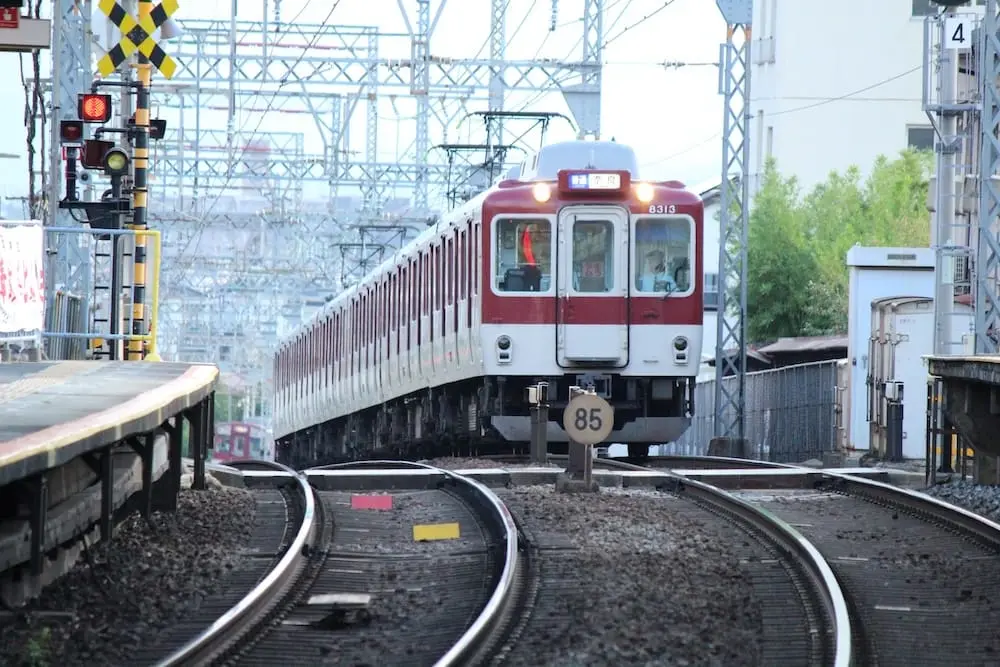
So, you've made the smart decision to fly to Japan. And an even smarter one to explore the Kansai region.
Osaka, Kyoto, Nara, and hidden gems like Ise-Shima and Nagoya are all waiting.
Thing is… how do you get around without breaking the bank?
Pa-dum pst. That’s where the Kintetsu Rail Pass comes in!
You’ve probably heard of the Japan Rail Pass (JR Pass). But this lesser-known Japan regional pass might be exactly what you need.
This Kansai travel train guide is your one-stop itinerary and pass explainer.
Inside, you’ll find a solid 5-day route to take inspiration from, tips on how to use the pass like a pro, and insights to help you decide if it’s the right fit for your trip.
First Things First, What’s the Kintetsu Rail Pass?
As the name suggests, the Kintetsu Rail Pass is an unlimited train pass by Kintetsu Railway - Japan’s largest private railway after JR.
It’s basically a Kansai-focused JR Pass. But way more affordable. Perfect if you're hopping between cities with unlimited rides for a set number of days.
A few things to know:
Works only on Kintetsu-operated trains (and buses, if you get the Plus version)
Doesn’t cover JR trains or Shinkansen. Honestly, though, you might not need them if your route’s well-planned
It’s a bit of a hidden gem. Not as famous as the JR Pass, but super useful if your trip centres on Kansai
Next up - the different types of Kintetsu passes, and how to pick the one that fits your trip best.
Types of Kintetsu Train Passes (Which One’s Right for You?)
Kintetsu offers four versions of its train pass. Which one you choose depends on how long you're travelling and how far you're going.
All passes are valid for consecutive days.
And good news, the Kintetsu Rail Pass is now fully digital. No physical ticket or voucher needed. You’ll receive a QR code by email, which you can scan at the station gate or show to staff.
Here’s a quick breakdown of the different Kintetsu Rail Pass types and prices, plus what each one covers:
Pass | Validity | Covers | Price (2025) |
|---|---|---|---|
1 day | Osaka, Kyoto, Nara + some buses | 1,900 yen | |
2 days | Same as above | 3,700 yen | |
5 days | All Kintetsu lines across Kansai, Ise-Shima, and Nagoya (no buses) | 4,900 yen | |
5 days | Same as above, plus Nara and Mie buses | 6,700 yen |
Prices are accurate as of May 2025 and may change. Please check the latest rates before your trip.
A Few Quick Tips:
Planning to cover every nook and cranny in Kansai? Go straight for the 5-Day Pass. It’s the sweet spot for hitting Osaka → Nara → Kyoto → Ise → Nagoya.
Get the Plus version if you’ll be using buses to reach shrines or temples.
There’s no 3-day option, so pick your start date carefully. It really matters.
Digital passes are super easy to use. Just show your phone at the gate and you’re good to go.
How to Buy and Use the Kintetsu Rail Pass
Kintetsu Rail Pass Coverage: Where Can It Take You?
Surprisingly far! The Kintetsu Rail Pass isn’t just for getting around Kansai. It also covers a huge chunk of central Japan.
And it extends beyond major cities like Osaka, Kyoto, and Nara, into even the industrial powerhouse that is Nagoya and the Ise-Shima region. Here’s where you can go:
🚉 Osaka
It'd be wise to start your journey from Osaka-Namba or Osaka-Abenobashi. Both are major Kintetsu stations. And if you’re staying near Namba or Osaka Uehommachi Station, you’re already right by a Kintetsu train line, so yay for that.
🦌 Nara City
Kintetsu trains are hands-down the most convenient way to reach Nara. And the Kintetsu pass covers both the Kintetsu Nara Line (from Osaka) and the Kintetsu Kyoto Line (from Kyoto).
You’ll arrive at Kintetsu Nara Station, which is way closer to Nara Park than JR’s station, so bonus points there.
Also, you'd be pleased to know that with the Kintetsu Rail Pass Plus, local Nara Kotsu bus services are also included. That can be super useful for reaching temples like Horyuji.
🏯 Kyoto
For Kyoto, the Kintetsu Pass is useful, albeit slightly limited.
One caveat is that it won’t work on JR or the subway within the city itself, since it's a different line.
But if you're doing Kyoto to Nara via train or heading down to Osaka for day trips or just general travel, it works perfectly.
⛩ Mie (Ise-Shima)
This is where the Kintetsu Pass beats most Kansai passes.
You can ride all the way to Ise Grand Shrine, Toba, and Kashikojima.
And with the Plus Pass, local buses in Ise and Toba are included. Ultra handy if you really want to dive deep into and reach the Inner Shrine and explore the coastline.
🏙 Nagoya
Yes, you can get all the way to Nagoya!
The ride is longer than the Shinkansen. But it’s covered by the pass. Perfect if you’re travelling slow, soaking in scenery, or connecting regions on a budget.
🎴 Other Routes Worth Mentioning
Iga-Ueno (famed for its ninja!) via the Iga Tetsudo Line
Ikoma Cable Car to Mt. Ikoma - probably the world's cutest cable car, with its dog and cat designs, and a fun stop if you’re near Nara or Osaka
Plenty of smaller towns across Nara, Osaka, and Mie - all included
What’s Not Covered?
JR trains, Shinkansen, or other rail companies like Hankyu, Hanshin, Keihan, and Nankai - these aren't covered by the Kintetsu Pass
Also the Japan Rail Pass doesn't cover Kintetsu lines as well
Subways or city buses (except in Nara and Mie with the Plus Pass)
Airport transfers - for example, getting from Kansai Airport to Osaka or Kansai Airport to Kyoto isn’t covered.
You’ll need to use a JR Pass, get a Nankai Rapi:t ticket, pre-book a Haruka Express ticket, or make a reservation for an airport limousine bus for those legs.
🚄 What About Limited Express Trains?
Well, your pass covers all regular, express, and rapid trains.
No reservations needed. Just hop on and go. Easy as pie.
But if you'd like to pamper yourself a little bit more than others, get ready for additional fees.
For the fancier Kintetsu Limited Express trains - like the Aoniyoshi, Hinotori, or Shimakaze - you’ll need to pay a seat reservation fee (usually between 520-1,600 yen).
These trains are part of Kintetsu’s sightseeing limited express services.
And they're way more than just transport from point A to B. You’ll get creature comforts, epic views, and a bit of luxury.
The Aoniyoshi Sightseeing Limited Express, for example, runs between Osaka, Nara, and Kyoto.
This swish train features plush interiors and lounge-style seating that looks more like a swanky bar than a train.
After all, who doesn't love a bit of pampering that way?
And if you're wondering specifically about the Aoniyoshi train price - well, it depends on where you're going.
But the fee is quite wallet-friendly, making it a great-value upgrade. For instance, you'll pay 2,140 yen for one adult and 1,080 yen for a child from Osaka-Namba Station to Kyoto.
In any case, just remember: the Kintetsu Rail Pass isn’t the same as the JR Pass.
While that might be a bummer for some, the pass does offer great flexibility across Kintetsu’s own express network.
Just keep in mind you’ll need to reserve and pay separately for Limited Express seats.
📝 Pro tip: Stick to the included rapid/express trains for shorter routes (like Osaka-Nara). But for longer stretches - say, Nagoya to Osaka or Osaka to Ise - a comfy Limited Express ride is 100% worth the small fee.
Now On to Our 5-Day Kintetsu Rail Pass Itinerary
So, we've already broken down what the Kintetsu Rail Pass is all about.
Now it’s about maximising it to the fullest.
Here’s a packed (but completely doable) 5-day route that shows you just how far you can go.
And it has everything you'd want in a Japan vacay - from city vibes to sacred shrines and the seaside.
Oh, and this works with either the regular or Rail Pass Plus, depending on whether you’ll be hopping on local buses too.
Here we go:
Day 1: Osaka → Nara City
Start your trip in Osaka with breakfast at Kuromon Market (you can join a food tour if you're unsure what to eat).
Then catch a train from Ōsaka-Namba Station (served by Kintetsu and sometimes referred to as Kintetsu Osaka Namba Station) or Osaka Uehommachi Station to Nara City (~40 mins).
Hang out with the free roaming deer at Nara Park, visit Tōdai-ji Temple, and stroll through Kasuga Taisha. You can combine all three in a personalised tour with a local - perfect for soaking in the rich history of this ancient capital.
If you’ve got the Rail Pass Plus, use bus services like the Nara Kotsu loop to save your legs.
Optional: Head back to Osaka for the night or stay in Nara for a quieter evening.
💡 Dinner tip: Hop off at Tsuruhashi on your way back. It’s home to a famous Koreatown with fresh seafood and top-tier BBQ.
Day 2: Nara → Kyoto (via Kintetsu Kyoto Line)
Hop on the Kintetsu Kyoto Line from Nara (35-45 mins).
Today’s all about temples, tea, and traditional culture.
Think Gion, Kiyomizu-dera (one of the best temples in the city), and maybe a sunset stroll down Pontocho.
Want something off the beaten path? Check out Chogosonshi-ji Temple, a hidden spot that’s quiet and deeply spiritual.
Stay overnight in Kyoto to make the most of your day - and avoid backtracking late.
📝 Note: This route detours via Nara - not the quickest, but it’s covered and scenic too.
Day 3: Kyoto → Ise-Shima (Mie Prefecture)
Time to go coastal - and really dial up the nature on your trip.
Head to Ise-shi Station (~2.5 hrs, with a transfer at Yamato-Yagi or Tsu on the Osaka Line).
Your first stop: the sacred Ise Grand Shrine. Begin at Gekū, then catch a bus to Naikū (covered with the Plus pass).
Wander Oharaimachi Street, try Ise udon, and soak in the peaceful forest surrounding the shrine.
Next, hop on a short train to Toba (~20 mins). Check out Mikimoto Pearl Island, or ride onward to Kashikojima for those beautiful Ago Bay views. This seaside corner is truly one of Japan’s underrated gems.
Feeling rushed? Stay overnight to enjoy the slower pace.
Day 4: Toba → Nagoya → Osaka (Optional Ninja Detour)
In the morning, ride a Kintetsu Limited Express to Nagoya (~1h 50m).
Stop by Nagoya Castle (best with a guide to learn the backstory), swing through the Osu shopping arcade, or dig into some miso katsu if you’re here for the food.
Up for more adventure? Detour to Iga Ueno from Iga-Kambe Station - home of ninjas, the Iga Tetsudo Line, and Akameguchi Station, which leads to the breathtaking waterfalls of Akame 48 Falls.
You can even book a ninja experience. Dress up, throw stars, and live out your Naruto or Rurouni Kenshin dreams.
Prefer to relax? Head to Yunoyama Onsen instead for a soothing hot spring soak.
🚌 There’s a bus stop right outside the onsen. Super convenient!
Wrap up your day by heading back to Osaka.
Day 5: Yoshino or Chill Day in Osaka/Kyoto
Last day! Still got some energy?
Catch the Yoshino Line from Osaka Abenobashi Station (~1h 15m) to Yoshino - an area that’s part of a UNESCO World Heritage Site, specifically the Sacred Sites and Pilgrimage Routes in the Kii Mountain Range.
It’s absolutely stunning during cherry blossom season (and even autumn as well), but generally beautiful year round thanks to the lush mountain scenery.
The Yoshino Ropeway is also Japan’s oldest and runs intermittently. But mostly during sakura season and weekends. Best to check ahead! If it’s not running, you can either walk up or hop on a local shuttle.
You can also explore shrines, scenic trails, and maybe even try a ride up to Mount Gozaisho if you're in the mood for more epic views.
Prefer a slower finish? Take it easy in Osaka or swing back to Kyoto for last-minute shopping and snacks.
Want something truly local? Try Asuka Village - a peaceful, countryside spot with a deep cultural legacy and zero crowds.
Note: Some spots like Naikū Shrine (Ise), sites in Asuka Village, and parts of Mount Yoshino may require a short walk or bus ride from the station. The Plus Pass covers most of these bus routes.
Cost Breakdown (All Covered!)
Route | If Bought Separately |
|---|---|
Osaka → Nara (round-trip) | 1,200 yen |
Nara → Kyoto | 1,100 yen |
Kyoto → Ise | 3,300 yen |
Ise → Toba → Nagoya | 2,600 yen |
Nagoya → Osaka | 4,800 yen |
Osaka → Yoshino (round-trip) | 2,300 yen |
Total | 15,300+ yen |
Kintetsu 5-Day Pass | 4,900 yen |
Kintetsu Rail Pass Plus | 6,700 yen |
Where to Buy the Kintetsu Rail Pass
Well, you’ve got two easy options:
You can either buy it online or in Japan.
Let’s break it down:
1. Online (Digital Pass or Voucher)
The easiest way to get the Kintetsu Rail Pass is to buy from an official travel site like Pelago or Kintetsu’s official platform.
Buying the Kintetsu Rail Pass on Pelago
You’ll get a QR code (digital ticket) or an e-voucher by email.
And often, buying from a third-party site is slightly cheaper or includes added perks.
Redemption is straightforward. All you need to do is:
Show the QR code on your phone at the gate or to staff.
Pelago offers city-specific listings (e.g. Kyoto or Osaka), but they’re all the same pass. Just tailored to your starting point.
The best part? You can pay in your local currency and get instant confirmation.
👉 Buy your passes here:
2. In Japan (Station or Airport)
Prefer to buy on the spot? You can grab your pass at major Kintetsu stations or airport travel counters.
Just look for ticket offices at:
Kansai Airport (KIX) - Kansai Airport Agency Travel Desk
Ōsaka-Namba, Osaka-Uehommachi, Osaka-Abenobashi
Kyoto Station, Kintetsu Nara Station
Nagoya, Tsu, and other large Kintetsu stations
You can also pay with yen or credit card.
Prices are fixed (e.g. 4,900 yen for the 5-day pass), and discounts are rare.
Activation Tip:
Your pass starts on the day you first use it, or the start date you specify at purchase. It’s valid for consecutive days until midnight of the final day - so plan your itinerary carefully!
Bonus Perks!
Your Kintetsu Rail Pass also unlocks discounts at select attractions. Just flash your pass and ask!
You can get perks at places like:
Mikimoto Pearl Island in Toba
Ago Bay sightseeing cruises
And other partner museums, shops, and attractions
Ultimately, Is the Kintetsu Rail Pass Worth It?
Whether you’re stepping off a local train at Asuka Station, feeding adorable deers in Nara, or gliding into Toba Station with unlimited access to Kansai’s coastal gems, the pass delivers serious value.
Skip the hassle of individual tickets and enjoy unlimited travel to some of Japan’s most popular destinations - all easily reached from major hubs like Osaka Station and steeped in Nara period charm.
✈️ Kick Off Your Kansai Trip, Stress-Free
Flying into Kansai? Don’t sweat the transfers.
Skip the queues with a pre-booked airport ride - complete with flight tracking, 24/7 support, and free cancellation. Straight from KIX to Osaka, Kyoto, or Nara.
🚄 Passes & Experiences to Level Up Your Itinerary
You’ve got the Kintetsu Rail Pass covered. Here are more smart picks to make your Kansai (and beyond) travels even smoother:
Unlock Osaka transport with the Nankai All Line 2-Day Pass.
Heading into town from KIX? The Nankai Rapi:t Airport Express is your sleek, fast train.
Flying into Nagoya instead? Grab a seat on the Meitetsu Airport Express straight to Nagoya Station.
Short on time? The Kyoto & Nara Day Tour packs the classics into one easy trip.
For something special, hop aboard the Kintetsu Blue Symphony - luxury train meets Japanese inn dining.
Planning multiple Kintetsu rides? The Kintetsu Rail Pass keeps your Kansai trip cost-friendly.